
Nearly five years after the 2021 Game Awards handed out its golden statuettes, the six Game of the Year nominees still read like a museum display of 2021’s quirks and contradictions. The ceremony’s 30 categories covered everything from content creation to audio design, but GOTY remained the trophy that made studio Slack channels vibrate. Looking back from 2026, that race was less a sprint and more a six-way interpretive dance—with one contestant eventually moonwalking off with the prize.
🔁 Deathloop
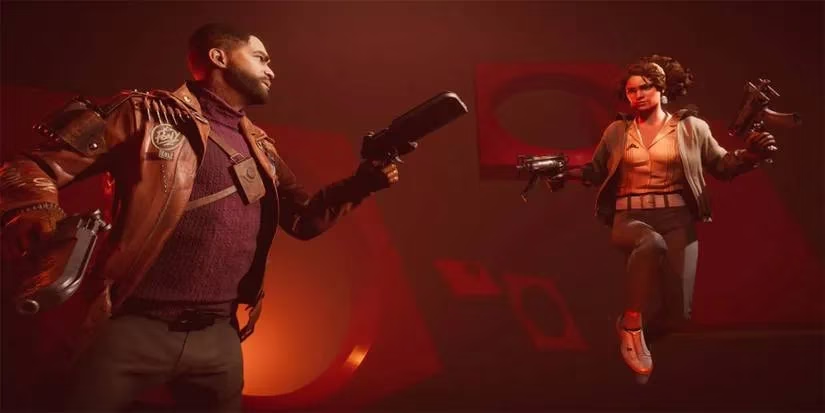
Deathloop arrived like a truffle served in a fast-food paper bag: unexpectedly approachable, stylish, and just messy enough by the final bite. Critics praised its 1960s-inspired art, interactive world, and the banter between Colt and Julianna. As an immersive sim for newcomers, it cracked open a genre that often treats failure as a personality test. Yet the second half of the story suffered from narrative loose threads, and the game sometimes coddled players rather than letting them untangle the loop’s logic themselves. In 2026, it still feels like one of the PS5’s earliest definitional curiosities, though not the most consistent.
🧸 It Takes Two
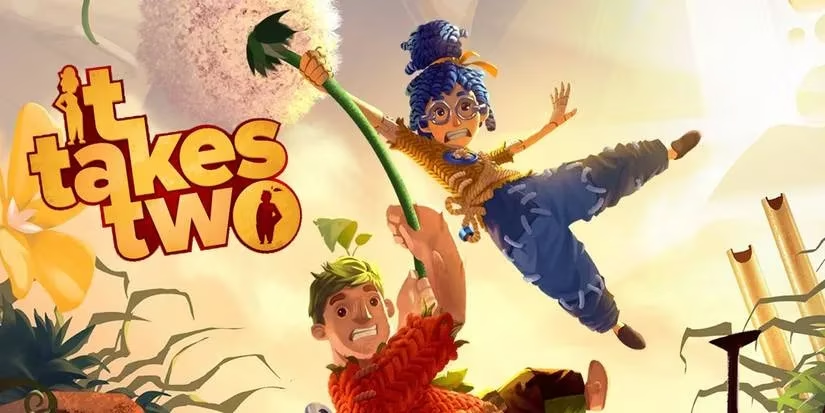
Then came It Takes Two, the co-op game that treated genre conventions like a toddler treats a stack of blocks: enthusiastically knocked over and reassembled every hour. Hazelight’s split-screen adventure threw in endless mechanics, from platforming to puzzling to a cursed vacuum cleaner, all in service of a divorcing couple turned into dolls. The gameplay felt like a breath of fresh air, especially for partners who wanted a shared screen without a shared frustration. However, the story had the emotional depth of a greeting card. The characters often came across as two-dimensional caricatures, and the game struggled to say anything concrete about marriage or divorce. Still, the eventual 2021 result would prove that fresh mechanics could outvote narrative wobbles.
🪐 Metroid Dread
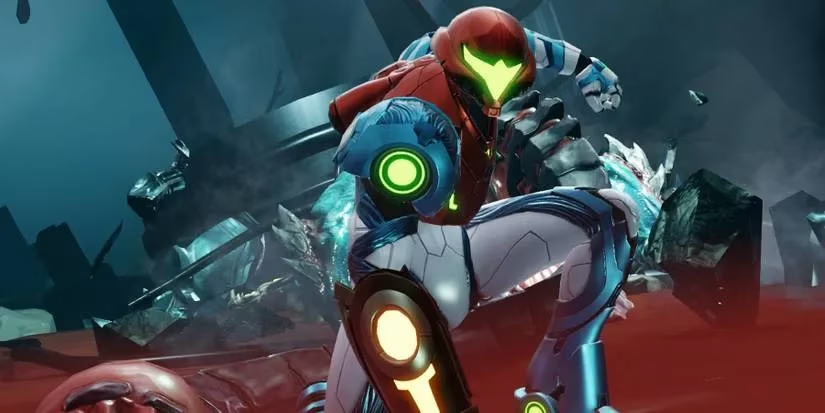
Metroid Dread was the surprise that made Nintendo’s E3 conference feel like a séance finally answered. Its controls were tight, its boss fights brutal in the best way, and its soundtrack summoned classic Metroid memories. But anyone who played it in 2021 knows the game’s difficulty was like a private gym where the only rope to climb was greased with one’s own overconfidence. Obtuse puzzles and a total lack of accessibility settings left some players locked out of Samus’s fun. It remains a masterpiece for series veterans, but its ‘you must be this stubborn to enter’ sign kept it from universal love.
🧠 Psychonauts 2
Psychonauts 2 existed at all, which was already a small miracle. Once it arrived, the visuals were a kaleidoscope built by an architect who forgot to include a floor plan—beautiful, symbolic, and occasionally disorienting. Each mind Raz entered felt like a gallery of raw ideas. Yet the gameplay felt like a museum piece itself, faithfully preserving the first game’s powers without adding much new. The later story beats rushed toward a conclusion that didn’t quite earn its emotional payoff. In a GOTY field this stacked, nostalgia alone was never going to be enough.
 .jpg?q=50&fit=crop&w=825&dpr=1.5)
🔧 Ratchet & Clank: Rift Apart
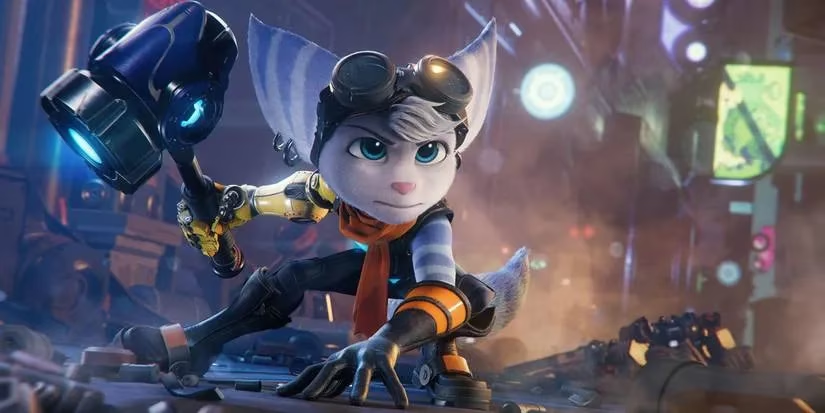
Ratchet & Clank: Rift Apart was the game that made the PS5 look like a magician showing off a new trick. Its dimensional rifts loaded worlds so quickly that players half-expected the console to apologize for being too fast. Rivet and Kit brought genuine heart, and the story was one of the series’ best. But underneath the technical fireworks, the core loop was still a repetitive shooting gallery. The arsenal was creative, but the constant blasting could wear down even the most patient Lombax enthusiast. As a showcase, it was superb; as a GOTY contender, it was sometimes more theme park ride than roller coaster.
🏰 Resident Evil Village
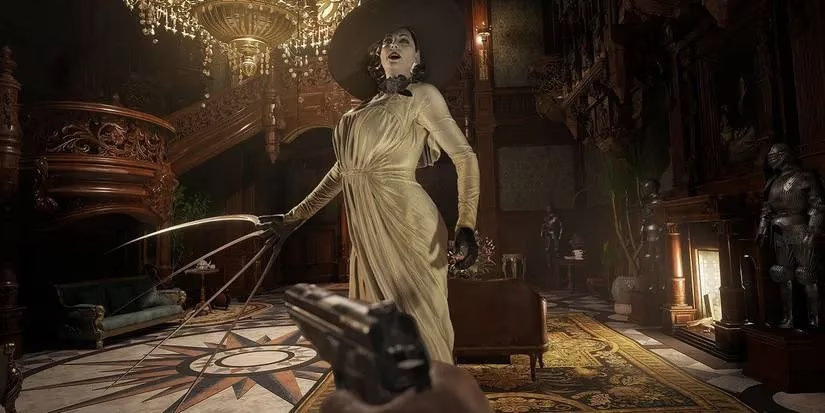
Resident Evil Village operated like a haunted theme park that kept moving the ‘You are here’ sign. It borrowed the horde chaos of RE4, the stealth dread of RE7, and even some of the action-shooter camp of RE5 and RE6. Lady Dimitrescu became a cultural phenomenon tall enough to blot out the sun, and the dollhouse section still haunts quiet hallways. But the game frontloaded its best tricks; the second half wobbled into less memorable territory. As a horror title, it also carried the genre’s built-in barrier: not everyone wants to be chased by a vampire with a claw. Many 2021 analysts pegged it as a frontrunner, and for good reason.
🏆 How the Race Actually Finished
At the time, the smart money split between Deathloop and Resident Evil Village, because both married memorable characters with gameplay freedom. A comparison table shows why no nominee had a clean sweep:
| Nominee | Chief Strength | Growing Pain |
|---|---|---|
| Deathloop | Stylish, accessible immersive sim | Second-half narrative wobbles |
| It Takes Two | Inventive co-op mechanics | Paper-thin relationship story |
| Metroid Dread | Razor-sharp controls and bosses | Obtuse puzzles, no accessibility |
| Psychonauts 2 | Stunning visual worlds | Dated gameplay, rushed finale |
| Ratchet & Clank: Rift Apart | PS5 technical showcase | Repetitive shooting sections |
| Resident Evil Village | Variety and memorable villains | Horror barrier, weak back half |
Of course, living in 2026 means the ending is no longer a mystery. It Takes Two won Game of the Year, a result that felt like a plot twist in its own co-op script. The jury’s choice now looks prescient: a game about collaboration took down a vampire castle, a time loop, and a sentient console showcase. The 2021 shortlist remains a perfect snapshot of an industry trying to please everyone at once—sometimes succeeding, sometimes shooting itself in the foot, but never boring.