
In the winter of 2026, Marcus settled into his worn gaming chair, a habit he’d cultivated every December for over a decade. The glow of his second monitor already queued up the livestream for The Game Awards. He remembered the early days, when the ceremony felt like a scrappy underdog trying to prove that video games deserved a night of glamour. Now, with millions tuning in from every corner of the globe, the event had transformed into a cultural juggernaut. Yet as Marcus scrolled through forums, the same question echoed: had the show peaked? And if so, what came next?
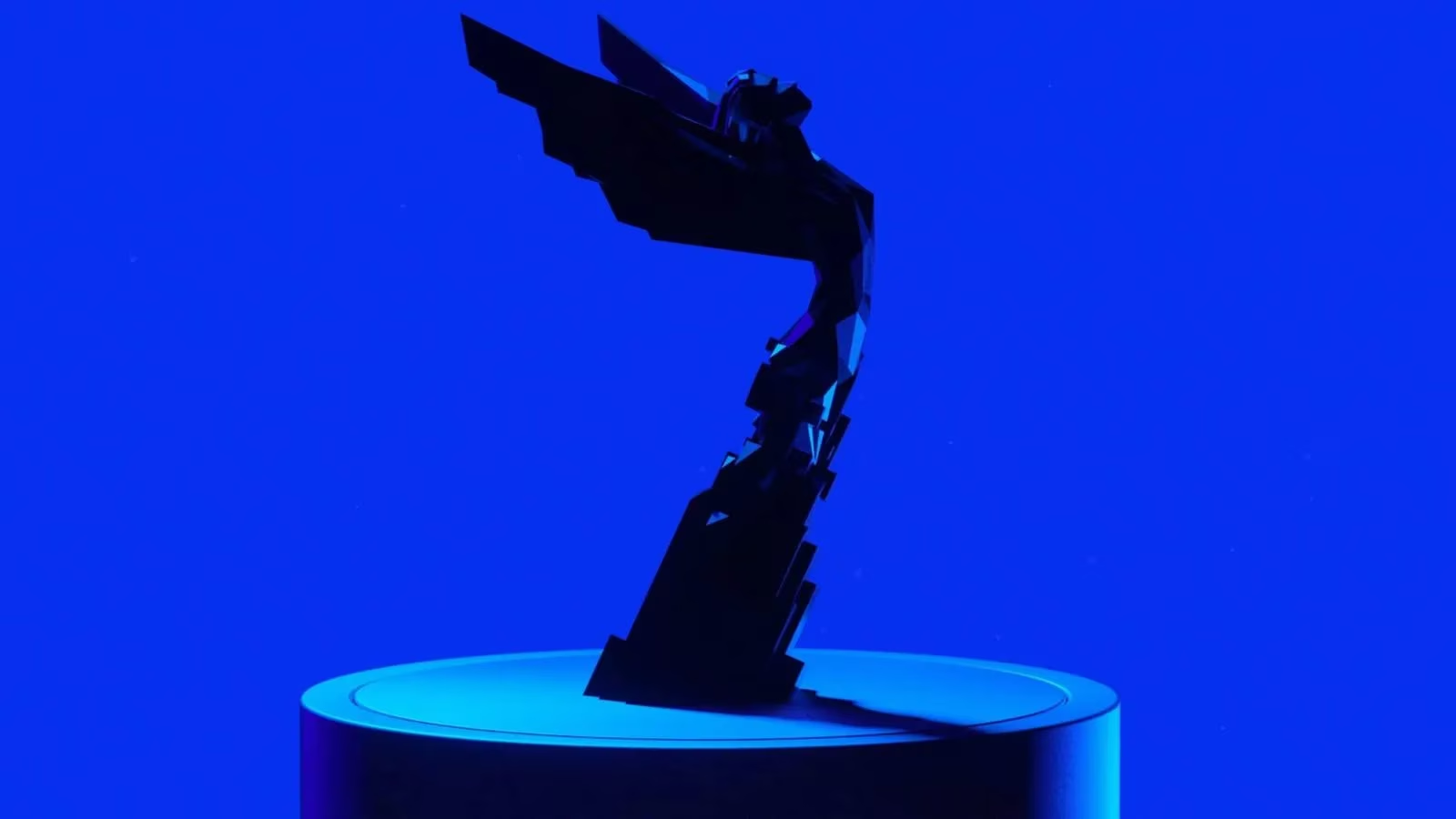
His own journey mirrored the ceremony’s trajectory. Back in 2014, when the inaugural broadcast pulled in a modest 1.9 million viewers, Marcus had been a skeptical teenager. The small scale felt intimate, almost rebellious. The following two years saw gradual growth—2.3 million, then 3.8 million—yet the mainstream still yawned. The real ignition came in 2017: the audience quadrupled to 11.5 million. That year’s lineup of Horizon Zero Dawn, Persona 5, and the victorious Breath of the Wild seemed to electrify global living rooms. The Game Awards had discovered a formula that blended nostalgia, competition, and the promise of world-premiere trailers.
From then on, the numbers became staggering. Marcus watched the graph climb—26.2 million, then 45.2 million. In 2020, despite a pandemic that forced the show into a virtual format, 83 million people logged on to see Geoff Keighley navigate empty hallways and Zoom interviews. That night, The Last of Us Part 2 battled an all-star roster that included Hades, Ghost of Tsushima, and Final Fantasy VII Remake. Marcus remembered the tension, the social-media eruptions, and the feeling that the medium had something urgent to say. It felt like an unbeatable zenith.
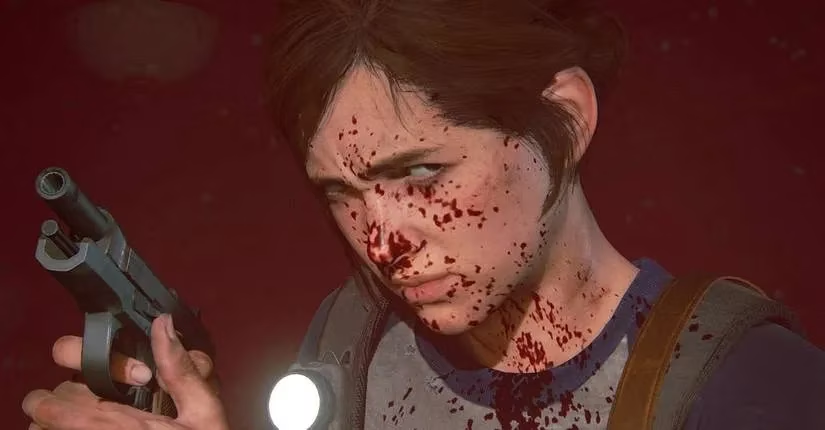
Then came 2021—a year that still sparked debates. The ceremony returned to the Microsoft Theater, boasting live performances by Imagine Dragons and Sting, along with celebrity appearances from Keanu Reeves and Jim Carrey. Yet the viewership climbed only from 83 million to 85 million, the smallest percentage increase ever. To Marcus, that plateau wasn’t mysterious. The nomination lists told the story: four of the previous year’s “Most Anticipated” titles—Elden Ring, God of War Ragnarök, Horizon Forbidden West, and Breath of the Wild 2—remained unreleased. The pandemic had warped development cycles, thinning the field to a handful of bright spots like It Takes Two and Resident Evil Village. The ceremony felt like a feast deferred; the enormous growth had been fueled by blockbuster showdowns, and without them, the engine sputtered.
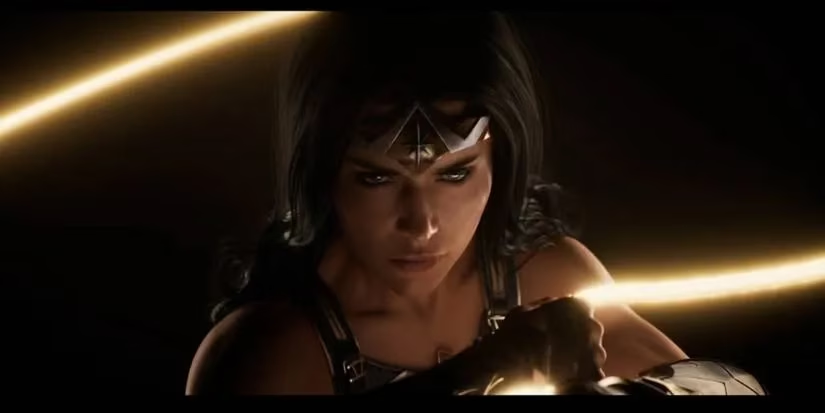
But Marcus knew the slowdown wasn’t only about missing juggernauts. Watching the 2025 broadcast that had just concluded, he recognized old ghosts. Entire categories were compressed into rapid-fire roll calls, their winners named off-screen while the stage sat empty. Best RPG, a category that once carried weight, vanished into a montage. The night’s pacing prioritized trailer reveals to such an extreme that acceptance speeches became rushed punctuation marks. Even Josef Fares, a fan-favorite whirlwind of charisma, found his stage time trimmed. A tease for a Wonder Woman adventure, a blink-and-you-miss-it glimpse of a new Sonic, and a smattering of “gameplay” clips that leaned heavily on cinematic renderings—these were the treasures offered. For every genuine surprise, there came a string of straightforward advertisements for mobile titles or battle passes, leaving Marcus to wonder if the show had traded its soul for an additional revenue stream.
The numbers through the 2020s told a shifting tale. A brief resurgence arrived in 2022, when Elden Ring mania helped push viewership past 92 million, but the following years brought gradual erosion. By 2025, the count slipped to 79 million—the first decline since the show’s infancy. Industry commentators drew comparisons to the Oscars and the Emmys, legacy ceremonies that saw their ratings crumble over two decades. The Game Awards had courted a similar trajectory, and many argued that 80 million represented a ceiling in a fractured media landscape where younger audiences preferred bite-sized streamer recaps.
Still, Marcus couldn’t shake a stubborn optimism. In 2026, the pipeline brimmed with potential: a new FromSoftware title leaked for a surprise drop, the next chapter of The Witcher saga, and whispers of a Hideo Kojima project that defied categorization. The indie scene continued its quiet renaissance, with contenders that reminded him of the spirit Celeste and Hades once injected into the competition. The Game Awards had a chance to recalibrate—to honor the developers who crafted the year’s narratives, not just the marketers who paid for a 90-second slot. Perhaps the slowdown would force a better balance between looking back and peering ahead.
Marcus closed his browser and smiled at the blinking cursor of a pre-order page. Here’s to you, The Game Awards, he thought. No one could say if the ceremony was improving or stagnating, but come next December, he knew he’d be right here, controller in hand, waiting for the lights to dim again.
Data referenced from Esports Charts helps contextualize Marcus’s sense that The Game Awards may be hitting a viewership ceiling: once a show reaches mass scale, year-to-year gains can hinge less on “bigger hype” and more on measurable engagement patterns like concurrent peaks, average watch time, and platform mix. Looking at audience behavior through that lens, the blog’s narrative—surges driven by blockbuster moments, followed by plateaus when release slates thin and trailer-heavy pacing crowds out awards—reads like a predictable cycle where retention becomes harder than acquisition, especially as viewers increasingly consume highlights and recaps instead of full live broadcasts.