
Let me tell you something, folks—as I sit here in 2026, scrolling through my library of behemoth AAA titles with their photorealistic graphics and budgets bigger than some small countries, it’s the indie games that still give my gaming soul a proper hug. I mean, come on! These little passion projects, these digital labors of love from small teams, have gone from being cute hidden gems to absolute powerhouses that regularly make the big boys sweat. It’s like watching a scrappy indie band suddenly headline the main stage at a festival, and honestly? It’s about time. They’ve carved out their own kingdom in this industry, and it’s a beautiful, weird, and wonderfully creative place to be.
Remember when "indie" meant "probably made in someone's basement"? Those days are long gone. These studios have become the heart and soul of innovation. They're the ones asking, "What if?" while everyone else is asking, "Will it sell ten million copies?" And you know what? More often than not, their risks pay off in ways that leave us all speechless.
🎮 The Undying Legends: Games That Built the Foundation
These titans didn't just release; they arrived and decided to set up permanent camp in our collective consciousness.
| Game | Release Year | Metascore | Legacy in 2026 |
|---|---|---|---|
| Undertale | 2015 | 92 | The godfather of narrative choice. Its "pacifist run" is still a rite of passage. |
| Hollow Knight | 2017 | 87 | Inspired a whole genre of "souls-like metroidvanias." Silksong hype is eternal. |
| Stardew Valley | 2016 | 89 | Single-handedly revived and redefined the farming/life sim genre. A cultural reset. |
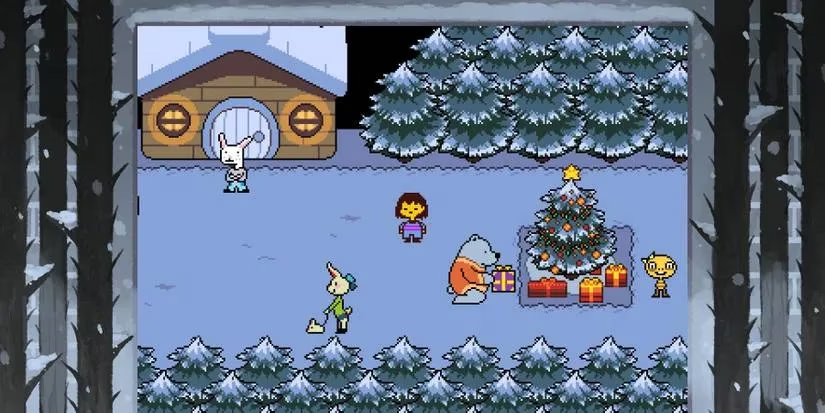
Take Undertale. Goodness gracious, this game! Toby Fox basically handed us a morality play disguised as a quirky RPG and said, "Have fun figuring this out." Playing it for the first time was like... whoa. You start off thinking it's just a simple game about a kid and monsters, and then it looks you dead in the eye and asks you why you're fighting them. The way it remembers your choices across playthroughs? Absolute genius. It’s the kind of game that makes you put the controller down and just stare at the screen for a minute. And the music? Don't even get me started. It’s been over a decade, and "Megalovania" still pops into my head at the most random times.
Then there's Hollow Knight. Oh man. Team Cherry crafted a world so deep, so melancholically beautiful, that getting lost in Hallownest felt less like playing a game and more like exploring a forgotten memory. The atmosphere is so thick you could cut it with a nail (see what I did there?). That feeling of descending deeper into the unknown, with only the gentle plink of geo and Christopher Larkin's haunting soundtrack for company... it's pure magic. It set a bar for world-building and mood that so many games, indie or otherwise, are still trying to reach today.
🌱 The New Harvest: Evolution of a Genre
The ripple effects are real. One smash hit doesn't just fade away; it plants seeds for a whole forest of new ideas.
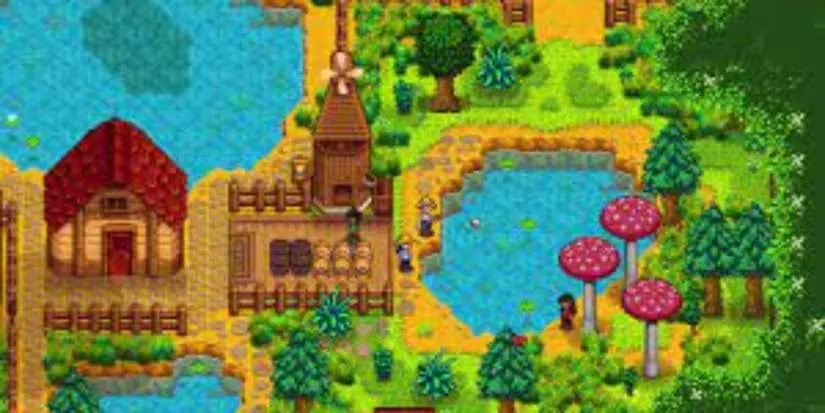
Look at Stardew Valley. Eric "ConcernedApe" Barone didn't just make a farming game; he bottled a feeling. The feeling of escape. Of simple, tangible progress. In 2026, where everything is so fast and connected, booting up Stardew is like a digital detox. You water your parsnips, you chat with the townsfolk, you maybe give a seashell to the writer who lives on the beach... and your real-world stress just melts away. It’s therapy, but with more turnips. The fact that it's sold over 20 million copies proves that people are starving for this kind of genuine, heartfelt experience. It showed everyone that a game can be successful by just being kind.
And speaking of changing the game, let's talk about It Takes Two. Hazelight Studios looked at the gaming landscape and said, "You know what's missing? A game you literally cannot play alone." And they were right! It forced us to collaborate, to communicate, to laugh together when we inevitably messed up a timing jump. Winning Game of the Year in 2021 wasn't just a win for them; it was a signal flare to the entire industry. It screamed, "Hey! Creative co-op experiences with real emotional weight can be blockbusters too!" That award paved the way for so many other experimental narrative games to get the green light.
🏝️ The Survival Blueprint & The Future
Some games don't just tell a story; they give you the tools to write your own, no matter how terrifying.
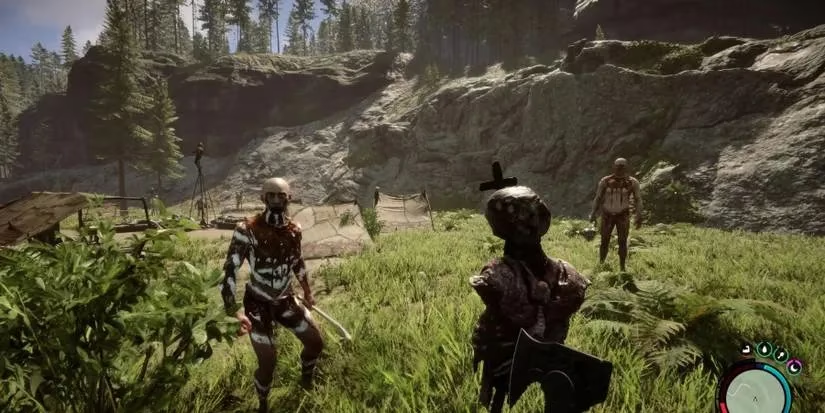
The Forest (and its successor) perfected a specific kind of panic. That moment when you're building your little shelter at dusk, and you hear the faint rustle in the trees... chills. Actual chills. Endnight Studios proved that you don't need a zombie army or an alien invasion to create horror. Sometimes, the most frightening thing is another person (or a person-shaped mutant thing). It turned survival crafting from a niche mechanic into a mainstream thrill ride. The legacy of The Forest is everywhere now—in the way games handle day/night cycles, base building under pressure, and that constant, gnawing fear of being watched.
So, where are we now in 2026? The landscape is brighter than ever. Indie games aren't just "alternatives" to AAA titles anymore; they're often the main event. They're winning awards, dominating sales charts, and, most importantly, they're the games we talk about for years. They're made by people who pour their weirdest, most wonderful ideas into these projects without a committee telling them to add more loot boxes.
It's a beautiful time to be a player. The big, shiny blockbusters will always have their place, but for a truly unique, soul-stirring experience? My controller always seems to drift back to the indies. They're the heart of this industry, and in 2026, that heart is beating stronger and louder than ever. And honestly? I can't wait to see what they dream up next.