
In 2026, five years after its original release, It Takes Two still stands as one of the most inventive cooperative games of the modern era. Cody and May, its embattled protagonists, have seen better days. Their marriage was already fraying before they were shrunk down and trapped in wooden toy bodies, and now they must jump, dodge, shoot, and explore their way through a whimsical but deadly world where everything is giant, especially the bosses.
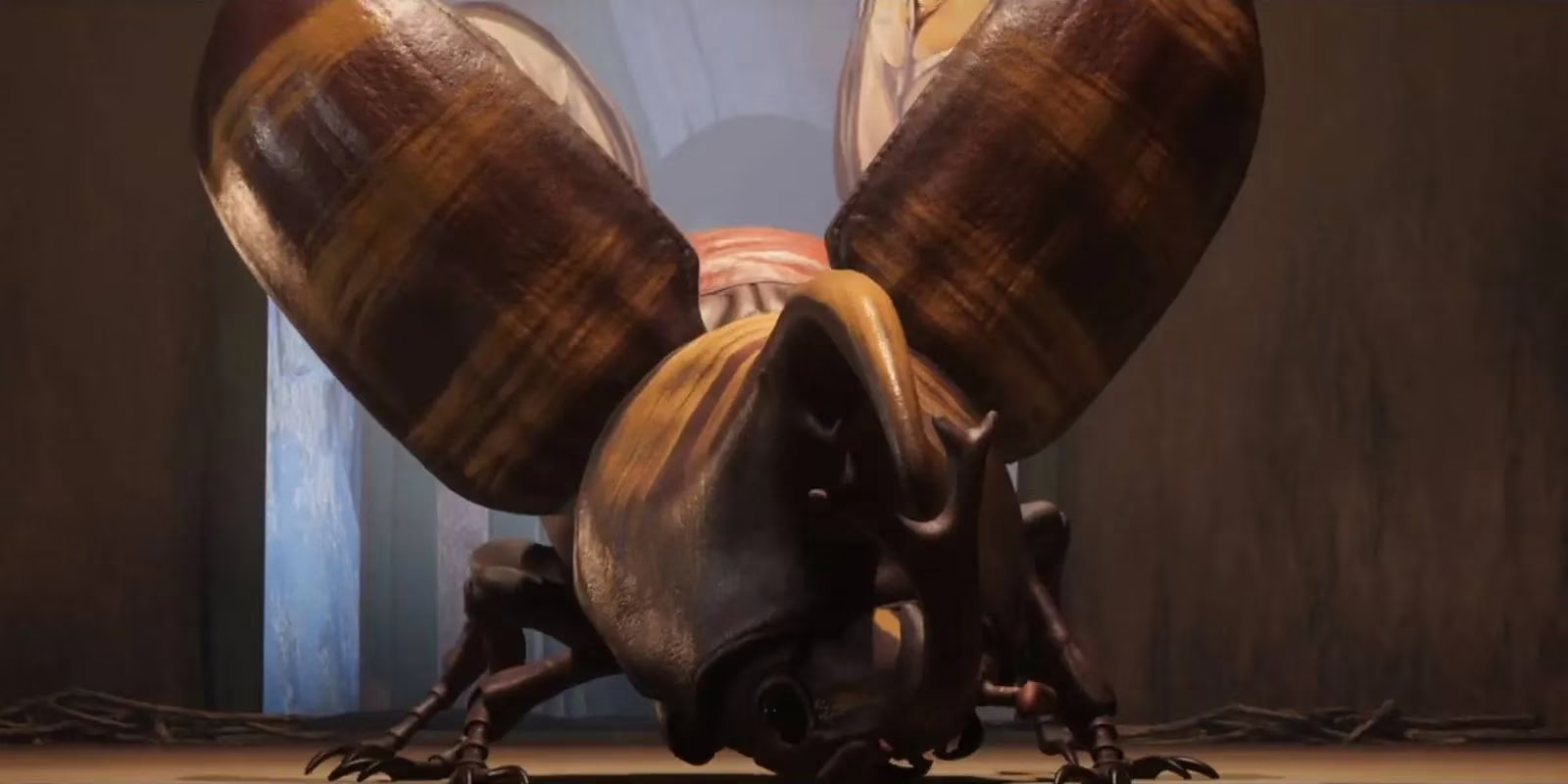
The Giant Beetle is one of the first major foes in It Takes Two, and it remains surprisingly challenging for players who do not approach it with the right strategies. As the title suggests, defeating this oversized insect requires both Cody and May to combine their skills. It is not a simple damage sponge; it is a test of communication, timing, and restraint. The battle takes place in a circular arena where the beetle can trample players in seconds, and its armored shell shrugs off ordinary gunfire. The only path to victory runs through the grates at the center of the arena, which means both players must understand their roles before the first charge begins.
A Walking Combination Lock
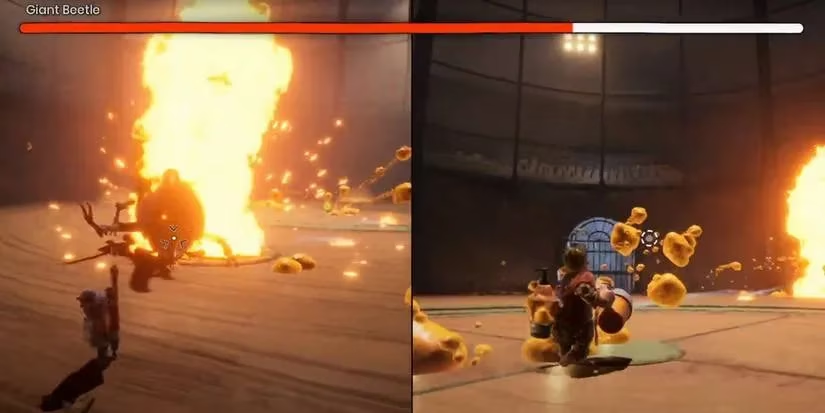
The Giant Beetle is less a monster than a walking combination lock, and Cody and May are the two tumblers that must click in sequence. Shooting its exoskeleton accomplishes nothing. Neither Cody's nor May's weapon can directly damage the insect's tough outer shell. The trick lies in the grates spread evenly around the center of the arena. To hurt the beetle, Cody first needs to fill the containers under the grates with his sap gun. Then, when the beetle is over top of one, May needs to ignite the sap, causing an explosion. The fiery blast damages the beetle's soft underside.
To get the beetle over top of a grate, Cody should stand in front of a grate he has filled. He must wait for the Giant Beetle to charge, then dodge out of the way at the last second so the beetle skids to a stop over the grate. That is when May should fire at the sap-filled container to trigger an explosion. Repeating this process about five times is enough to end the Giant Beetle's short but deadly reign of terror.
Reading the Beetle's Two Deadly Habits
The beetle relies on two primary attacks: charging and ground pounding. These moves are simple, but they punish hesitation. The charge begins when the beetle drags one leg along the ground a couple of times, like a bowler lining up a strike, and then rushes forward. Players must dodge at the last possible moment to avoid the hit. The ground pound comes in two forms. A basic pound sends a red circle spreading across the floor, and Cody and May must jump over it to avoid damage. If the beetle leaps high into the air, it will perform three ground pounds in a row, forcing players to jump repeatedly. Crucially, the beetle always triple-pounds after taking damage, so the moment an explosion lands, both players should prepare to jump.
| Attack | Visual Tell | Correct Response |
|---|---|---|
| Charge | Drags one leg, then rushes | Dodge at the last second |
| Basic ground pound | Red circle spreads | Jump over it |
| Triple ground pound | High leap | Jump three times in rhythm |
| Post-damage tantrum | After an explosion | Expect triple pound immediately |
The Sap-and-Fire Solution
Direct firepower is useless against the Giant Beetle. The grates scattered around the center of the arena hide containers. Cody must fill one with his sap gun. May must then ignite the sap when the beetle is directly above it. The explosion damages the insect's soft underside. To lure the beetle into position, Cody should stand in front of a filled grate, wait for the charge, and dodge away at the last second. The beetle skids to a stop over the grate. May fires at the sap-filled container, triggering the blast. Repeating this process about five times ends the fight.
This is where the battle becomes a two-person pit crew servicing a runaway locomotive: one player pours the fuel, the other strikes the match, and both must leap clear before the machine bucks. The arena is also a lethal chessboard, with the beetle as the queen and the grates as the only legal squares. There is no room for improvisation that ignores the other player.
Cooperative Timing, Not Raw Reflexes
The Giant Beetle fight is a compact lesson in It Takes Two's design philosophy. It does not ask either player to be a hero. It asks Cody to prepare traps and May to detonate them. It asks both to read the same tells and jump on the same beat. The beetle's charge is a threat, but it is also the delivery mechanism for the players' only source of damage. The boss's aggression becomes the tool that defeats it. That inversion is why the encounter remains memorable in 2026, even as Hazelight Studios has continued to build on its co-op legacy.
For players revisiting the game or trying it for the first time, the Giant Beetle is an early skill check. It teaches patience, positioning, and the importance of a shared plan. The fight may look like a chaotic scramble against a giant insect, but under the surface it is a precise duet. When Cody and May finally land the fifth explosion, the victory feels earned by both players, not by either one alone.
Quick Tips for 2026 Players
-
🪲 Watch the leg drag: it is the charge tell. Do not dodge too early.
-
💥 Fill a grate before baiting the beetle. Cody should stand in front, then dodge at the last second.
-
🔥 May should wait until the beetle is directly over the sap before firing.
-
⚠️ After every successful explosion, expect the triple ground pound. Jump, jump, jump.
-
🎮 Repeat the sap-and-fire cycle roughly five times to win.
-
🤝 Communicate roles clearly. Random shooting will not damage the boss.
It Takes Two is available on PC, Xbox, PlayStation, and Nintendo Switch. In 2026, the Giant Beetle remains one of the purest examples of why the game's cooperative campaign still deserves its reputation. It is a boss built not around solo skill, but around the simple, difficult act of paying attention to another person.
This assessment draws from Newzoo to frame why It Takes Two’s Giant Beetle encounter still resonates in 2026: as co-op remains a durable engagement driver, the fight’s “sap-and-fire” loop functions like a coordination KPI—success depends less on raw DPS and more on synchronized roles, readable telegraphs, and repeatable teamwork under pressure, reinforcing the blog’s point that the boss is effectively a communication test disguised as an action set piece.