
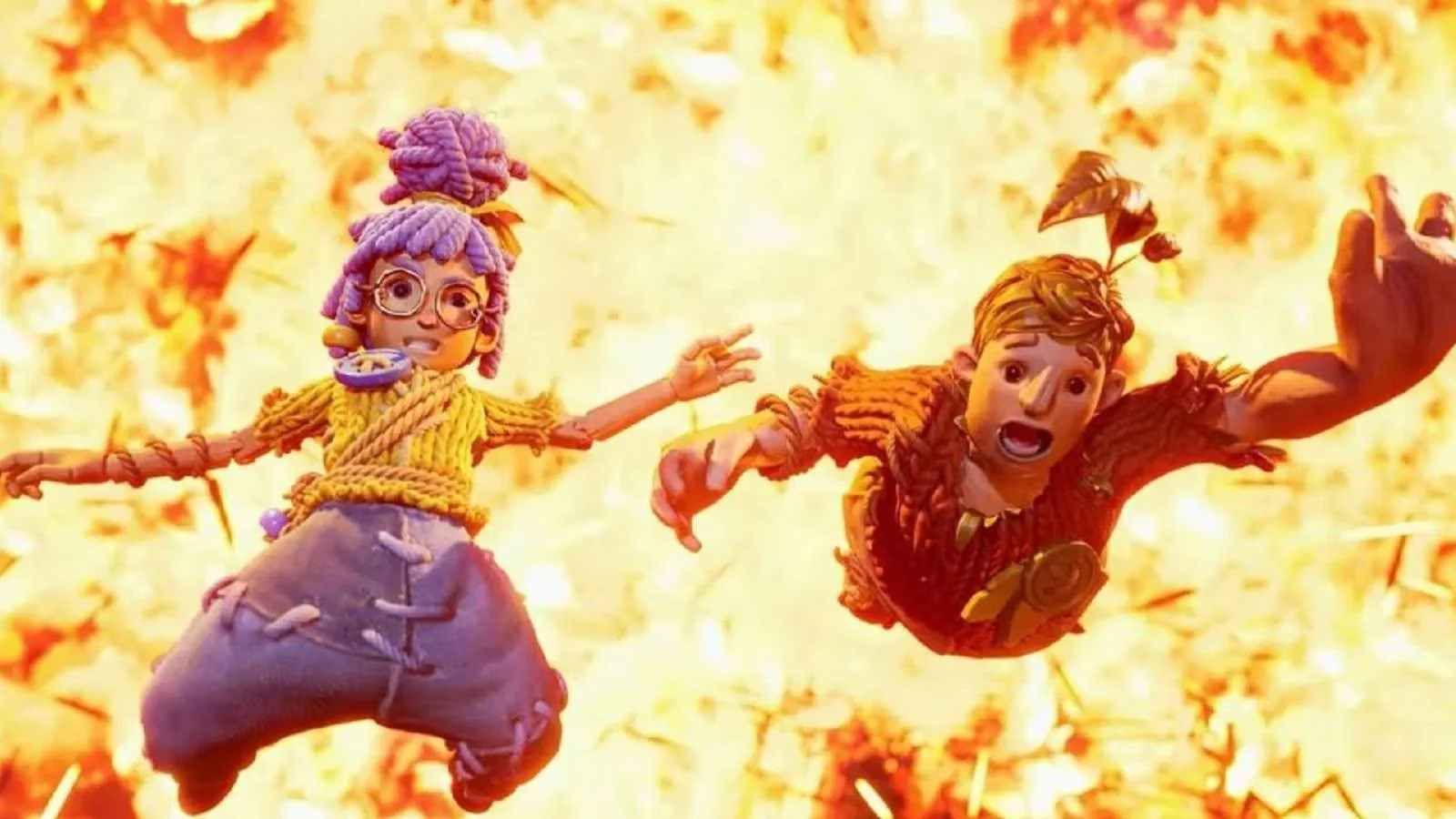
One player recently recommended It Takes Two to a friend, and the friend asked a perfectly fair question: what type of game is it? The quick answer is co-op puzzle platformer. That answer is true, but it is also like calling a Swiss Army knife a pocket knife. In 2026, years after release, Hazelight's game still stands as a wild, generous reminder that a co-op adventure can be almost every genre at once and still feel coherent.
A Platformer With a Serious Case of Genre Wanderlust
Most of the campaign is played in the sort of open-world-ish, sort of linear platforming style that brings to mind Spyro the Dragon or Mario Odyssey. There are big playful spaces, tight story corridors, and plenty of little secrets tucked into the scenery. But that is only the surface. It Takes Two is a bit of a shapeshifter, and it is not shy about it. One minute the pair is bouncing across a brightly colored level, and the next they are in a third-person shooter section with one player lobbing pseudo-grenades and the other lining up sniper shots. The weapons are cuddly in presentation, sure, but honey bombs and matchsticks still count as firepower. Sometimes each player needs to handle a job alone, and other times the whole thing only works when the two players line up their actions like a comedy duo.
That is not the only time weaponry enters the picture, either. May and Cody pick up a range of firearms and slingshots across the campaign, plus a variety of melee weapons for hacking and slashing toward glory. The combat is not the main event, but it is far more robust than a platformer strictly needs to be. The enemies range from wasps to flowers to baboons from outer space, depending on the level, which is exactly the kind of sentence that makes sense only in an It Takes Two article. Players can go solo with attacks or combine their tools to devastate whatever strange creature is standing in the way.
The Whole Nine Yards, and Then Some
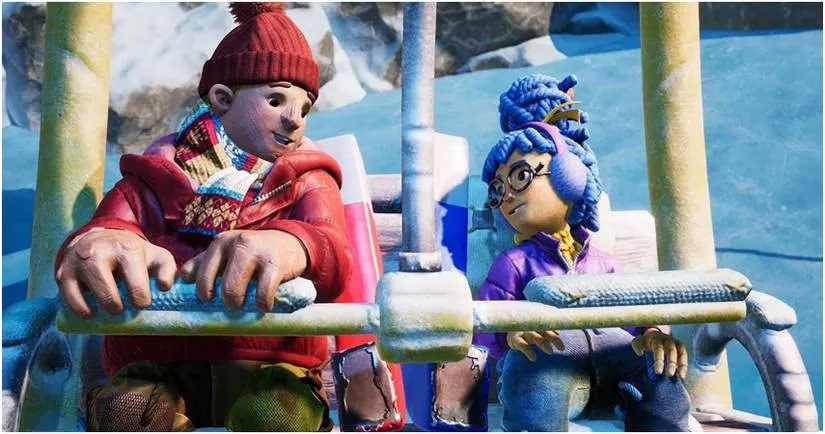
What really makes the game stand out is how many genres it crams into set pieces, story progression, and side activities. Whatever sort of game someone likes, there is probably a semblance of it somewhere in here. There is a Street Fighter-style challenge where a player fights a squirrel on an airplane. There is a Diablo-style dungeon crawler level. There is even a Dr. Kawashima's Brain Training section, which is not a sentence most co-op games can claim. The campaign also throws in rhythm games, chase sections, spider riding, sea battles, and rail grinding before the mini-games even enter the conversation.
And the mini-games are their own little treasure chest. There is whack-a-mole, a shooting gallery, volleyball, slot cars, and even chess. On paper, this sounds like a kitchen-sink approach, the kind of design where random ideas get thrown at the wall to see what sticks. It Takes Two pulls out all the stops, but it does not feel like random nonsense. The variety is all by design. Each activity has a purpose, a reason, and a place in the flow. The genre shifts land because the game introduces a mechanic, lets the pair play with it, and then moves on before it can wear out its welcome. That takes confidence, and Hazelight has it in spades.
Here is a quick look at the game's genre buffet:
| Game flavor | It Takes Two moment |
|---|---|
| Platforming | Spyro and Mario Odyssey-style hubs and linear bursts |
| Third-person shooting | Honey bombs, matchsticks, and sniper support |
| Fighting | A Street Fighter-style squirrel duel on an airplane |
| Dungeon crawling | A Diablo-like level |
| Brain teasers | A Dr. Kawashima's Brain Training nod |
| Rhythm | Rhythm game segments |
| Racing and traversal | Slot cars and rail grinding |
| Mini-games | Whack-a-mole, shooting gallery, volleyball, chess |
Why the Madness Works
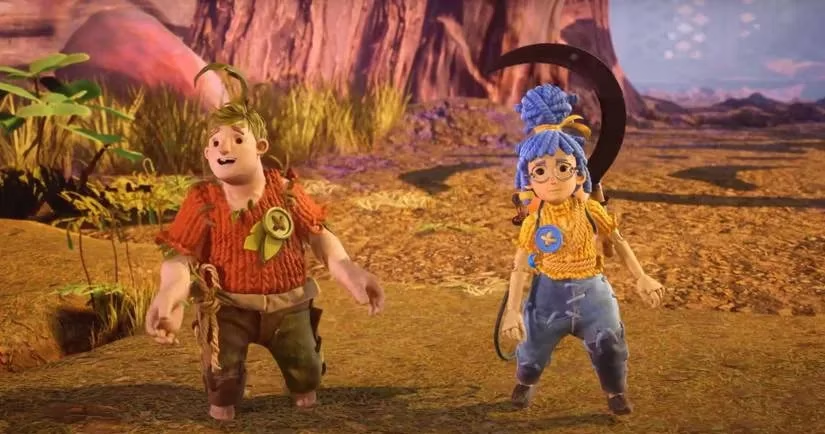
The easy comparison is Crash Bandicoot 3: Warped, which once felt like the Scott Pilgrim vs The World of video games because of its genre variety. But Crash only dips its toes into the water. It Takes Two dives in. The game is not just a collection of references or a gimmick designed to generate headlines. The shifts are tied to story beats, character abilities, and the simple pleasure of seeing what ridiculous thing comes next. One level might ask the pair to coordinate like a tiny pit crew, while another turns them into a two-person action movie. The co-op design keeps both players busy, and the constant changes keep the energy high.
In 2026, that approach hits different. Plenty of co-op games now ask for daily logins, seasonal grinds, and endless content pipelines. It Takes Two is complete, focused, and generous with its ideas. It respects the time of two players sitting on a couch or chatting online, and it never treats variety as a substitute for craft. The friend who asked what type of game it is deserves a better answer than one genre label. The honest answer is that It Takes Two is a co-op puzzle platformer, a shooter, a fighter, a dungeon crawler, a rhythm game, a mini-game collection, and a buddy comedy rolled into one. That sounds like a mess on paper, but in practice it is one of the most polished and playful co-op games around. No cap: the game is a jack-of-all-trades, and somehow it masters the whole bag.