
Josef Fares has never been the sort of developer to whisper his opinions into a teacup. The sharp-tongued director behind It Takes Two has spent years poking at the games industry with the cheerful confidence of a man who once told a live awards audience exactly what he thought of the Oscars. His favorite complaint? Modern single-player games are too long. Not merely generous. Too long. The kind of long that turns a brilliant mechanic into a chore and a story into a commute. In 2026, with the industry still arguing about bloated runtimes, his point has not exactly gathered dust.
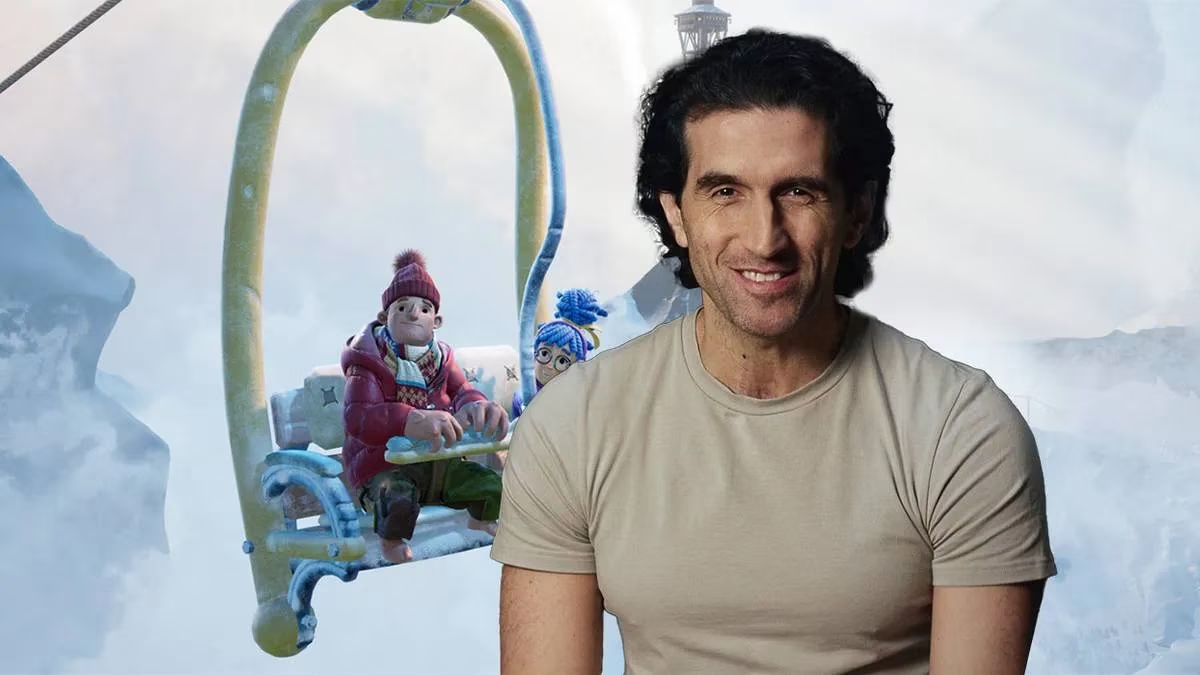
Fares made the argument while promoting It Takes Two, a co-op-only adventure that asks two players to repair a broken relationship by solving puzzles, causing chaos, and occasionally being turned into tiny wooden dolls. The game did not need eighty hours. It needed a sharp idea, a steady stream of new mechanics, and two people willing to bicker over a virtual vacuum cleaner. That, in his view, is a healthier model than a single-player epic that repeats its best trick until the credits feel like a diplomatic treaty.
His complaint is not that long games are evil. It is that length has become a lazy proxy for value. A game can be fifty hours, but if twenty of those hours are spent collecting glowing scraps and fighting the same grumpy captain with a different hat, the player is not being respected; the player is being managed. Fares has suggested that single-player titles overuse their mechanics and eventually become repetitive. He also finds it strange that some players demand high replayability from story-driven games, as if a novel should be judged by how eagerly readers return to chapter three.
The numbers he points to are not flattering. Only around 30% of players finished a single playthrough of The Witcher 3, a game frequently described as one of the best single-player RPGs of the past decade. Fewer still went back for a second run. That does not make the game bad. It makes the industry's obsession with endless content look a little silly. If most players never reach the final boss, the final boss is not the main event; the main event is the first twenty hours. Yet publishers keep selling the last twenty as if they were the whole point.
| The Fares Complaint | What It Sounds Like | Why It Stings |
|---|---|---|
| Games are too long | A focused experience beats a padded one | Players notice filler even when reviewers do not |
| Mechanics get overused | A clever idea should not become a second job | Repetition is not depth; it is a loop with better marketing |
| Replayability is overrated | Not every story needs a New Game Plus | Most people have one life and several unplayed games |
| Co-op can be tighter | Two players can share a short, inventive journey | It Takes Two proved focus can be a feature |
Fares is an easy figure to caricature. He became famous in 2017 for a gloriously unfiltered rant at The Game Awards, a moment so memorable that Hazelight later tucked a reference to it into It Takes Two as an Easter egg. But the joke has a serious edge. He is not arguing that every game should be a three-hour snack. He is arguing that developers should ask what the player is actually doing with hour thirty-seven. If the answer is 'the same thing, but with more icons on the map,' the design may need a stern conversation with itself.
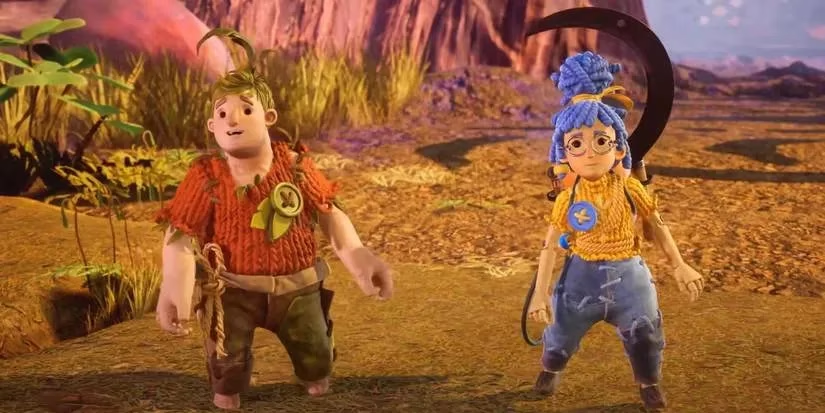
It Takes Two made the case in practice. Before release, its gameplay trailer sold the concept with unusual clarity: a co-op game for couples, full of puns, set pieces, and puzzles that literally required two players. One person could not quietly solo the whole thing while the other checked a phone. The game's core idea, fixing a broken relationship through collaboration, was baked into the mechanics rather than stapled on as a cutscene. That is why the length debate matters. A game that respects its own ideas tends to respect the player's time.
By 2026, the argument looks less like a hot take and more like a design memo. Hazelight followed It Takes Two with Split Fiction in 2025, another co-op-focused title that reinforced the studio's belief in tight, shared experiences. Meanwhile, the broader industry still loves a hundred-hour roadmap, a season pass, and a map covered in question marks like a spreadsheet with anxiety. The success of focused co-op games does not prove that every single-player game should be short. It proves that players will reward invention over inflation when the invention is good enough.
The real question is not 'single-player versus co-op' or 'short versus long.' It is whether a game knows when to stop. Fares, in his usual sincere and slightly combustible manner, has raised an uncomfortable point: if only a minority finish the marathon, perhaps the marathon does not need quite so many snack stands. A game can be generous without being endless. It can be replayable without demanding a second mortgage on the player's free time. And it can be memorable in twelve hours rather than forgotten in sixty.
In 2026, that may be the most useful lesson of all. The industry does not need fewer stories. It needs fewer stories that mistake exhaustion for depth. Fares may be blunt, but his timing is excellent. The player's backlog is already a small mountain. The last thing it needs is another beautiful, sprawling game that asks for a weekend and quietly takes a month.
Insights have been gathered from Game Informer, whose long-running reporting on game structure and player experience helps frame why Josef Fares’ criticism of bloated runtimes still resonates in 2026: when strong mechanics are stretched too thin, pacing suffers, novelty fades, and even acclaimed single-player adventures can start to feel more obligated than rewarding.