
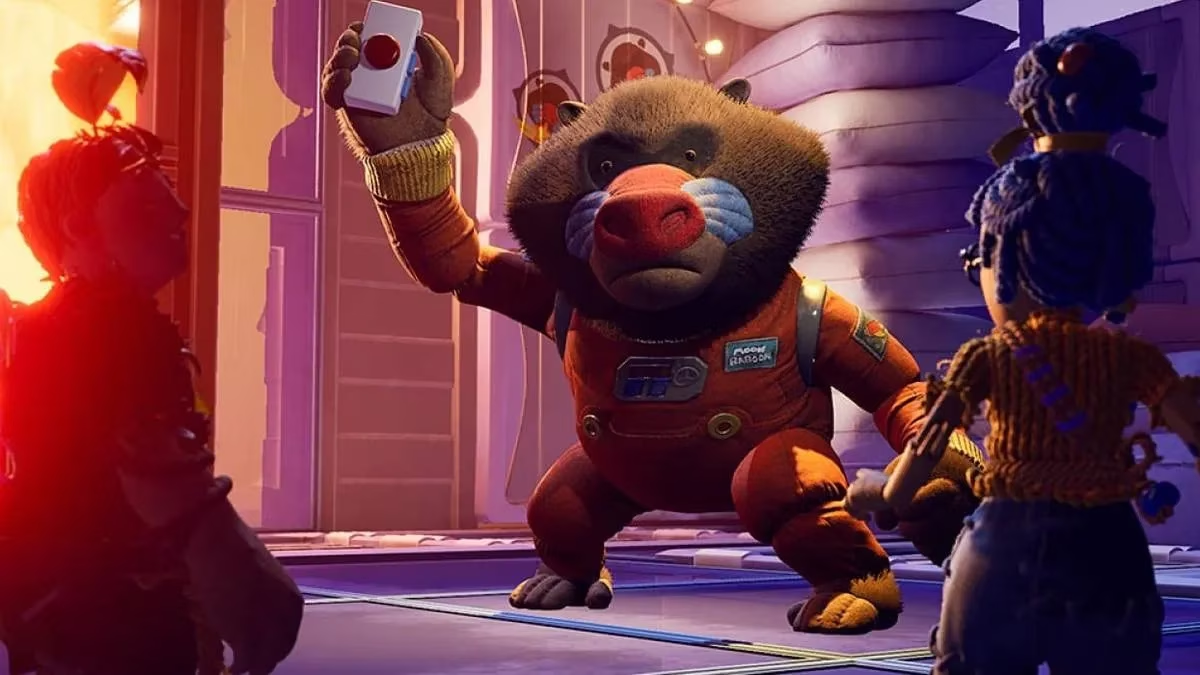
In 2026, It Takes Two still stands as one of the best co-op games I can recommend, and the Moon Baboon fight is still one of its loudest reminders that teamwork is not optional. I recently ran the boss again with a friend, and the same truth hit us: this is not a fight you can brute-force. It is a three-phase coordination test, and if my partner and I stop talking for even a few seconds, the arena turns into a mess of lasers, rockets, and grenades. Here is how I approach the fight now, phase by phase.
The Three-Phase Checkpoint
| Phase | My main job | My partner's main job | Damage window |
|---|---|---|---|
| 1 | Find and stand on the floor button | Guide the UFO laser into the raised pylon | Pylon hit |
| 2 | Dodge rockets and jump on one | Ride the rocket into Moon Baboon | Rocket collision |
| 3 | Shrink inside the UFO and hit eject | Survive arena attacks, then pilot the ship | Turret shot |
I like to think of the fight as a relay race. The boss changes the rules, but the core rule never changes: one player creates the opening, and the other player uses it. That is why I never treat this as a pure damage race. The Moon Baboon punishes players who panic and rewards pairs who call out targets clearly.
Phase One: Use the UFO's Own Laser
At the start, the Moon Baboon sits inside a flying UFO and fires a laser at one player at random. Whoever is targeted should focus on dodging and pulling the beam around the arena. The other player needs to scan the floor for a button and stand on it. That raises a pylon out of the ground. The targeted player then guides the laser into the pylon, which damages the boss.
After that first hit, the Baboon mixes in lasers aimed at both players and starts tossing grenades around the arena. My partner and I usually split our attention here: one of us keeps moving, and the other watches for the next button. Eventually, the boss locks onto a single player again. We repeat the button-pylon-laser routine a couple more times to finish phase one.
Phase Two: Catch a Rocket
The second phase swaps lasers for rockets. The boss fires rockets at the players, and my first instinct is always to run, not fight. That is correct here. The rockets eventually land harmlessly on the ground, and that is when they become useful. I jump on a landed rocket and ride it directly into Moon Baboon to deal damage.
This phase is simple in theory and messy in practice. The rockets can fill the arena quickly, and the player who is not riding still needs to stay clear. We repeat the process until the boss loses another third of health. I have found that short callouts work best here, such as left side, jump now, or I am riding. Long explanations get someone hit.
Phase Three: Shrink, Dodge, Eject
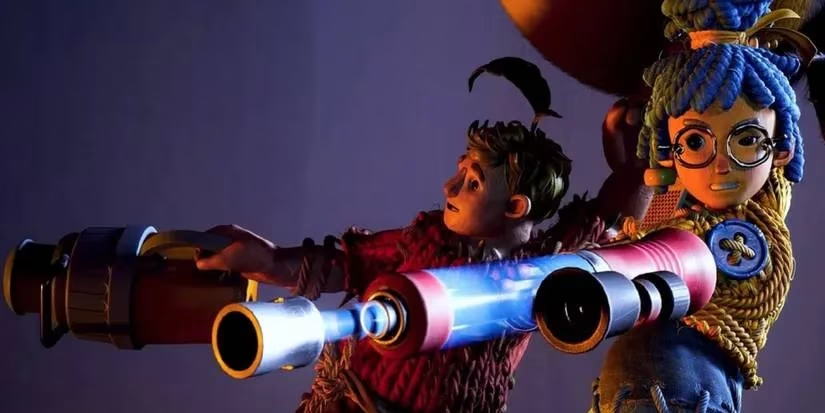
The final phase is the one that broke my concentration the first time. Cody shrinks down and runs around inside the UFO to find the Eject button. He has to avoid electric walls and lasers to reach the big red button, then ground pound it to launch the Baboon out. All the while, May runs around the arena avoiding the attacks that Moon Baboon throws at her.
Once Cody succeeds, May takes control of the ship and Cody mans the turret. May maneuvers the ship while Cody lines up a perfect laser shot at Moon Baboon. That last sequence is short, but it still demands calm hands. If one player rushes, the whole phase can fall apart.
My Biggest Takeaways
-
🗣️ Talk first, shoot later. Clear, short callouts are more useful than long explanations.
-
🔁 Trade roles instead of duplicating them. One player creates the opening, the other uses it.
-
🏃 Keep moving. Standing still in this arena is how good runs end badly.
-
🎯 Treat each phase as a new puzzle. The boss is not just a health bar; it is a sequence of jobs.
As of 2026, It Takes Two is still playable on Xbox One, PlayStation 4, Xbox Series X, PlayStation 5, and PC. If you are heading into the Moon Baboon fight, my advice is simple: slow down, communicate, and trust your partner. The boss is loud and chaotic, but the solution is always built for two.