
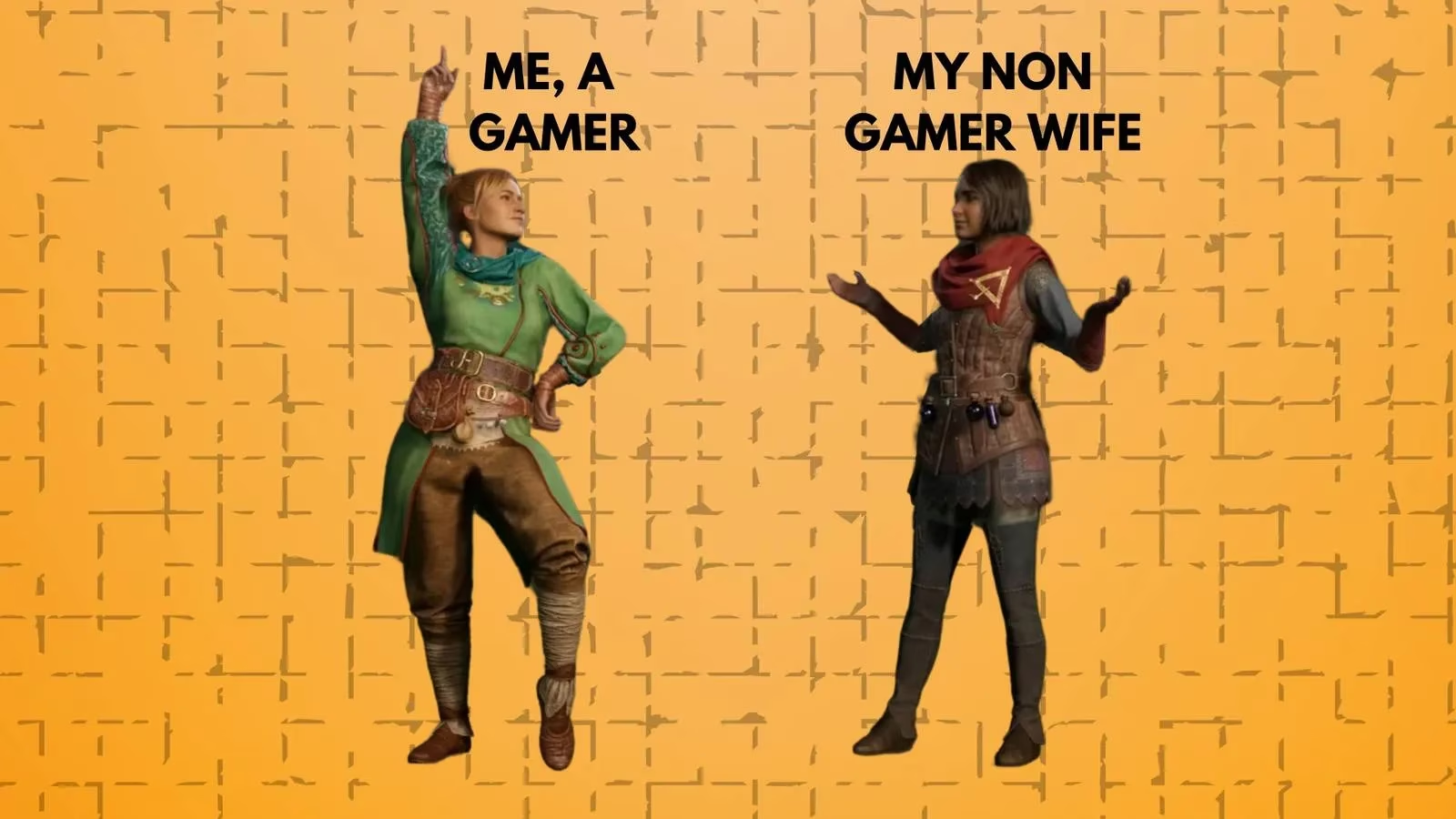
Let me paint you a picture, folks—one that'll probably have you nodding along like, "Yep, been there, done that." Picture this: It's 2025, I'm sitting on my couch with my partner (let's call her the "Non-Gamer Wife" for dramatic effect), and we're diving into It Takes Two. And guess what? I was the MVP. The GOAT. The one carrying the team! Whether you were playing with a significant other, a buddy, or that co-worker you were low-key trying to impress, if they weren't already browsing gaming sites in their free time, you were almost certainly the better player. And now, with Split Fiction just around the corner in March 2026, I'm equal parts hyped and terrified about whether lightning can strike twice in the co-op gaming world.
Why It Takes Two Was a Co-op Masterpiece
Let's get real for a sec. I've tried, oh how I've tried, to get my better half into gaming. But between the ridiculous time commitments (looking at you, 100-hour RPGs), those soul-crushing difficulty spikes, and the general assumption that you already know what an "RPG" or "platformer" is, it's been an uphill battle. It Takes Two was the game-changer—literally. It found that sweet spot where I could do most of the heavy lifting, guiding her through puzzles and platforming, while still leaving room for her to contribute meaningfully. It was like gaming with training wheels, but in the best way possible.
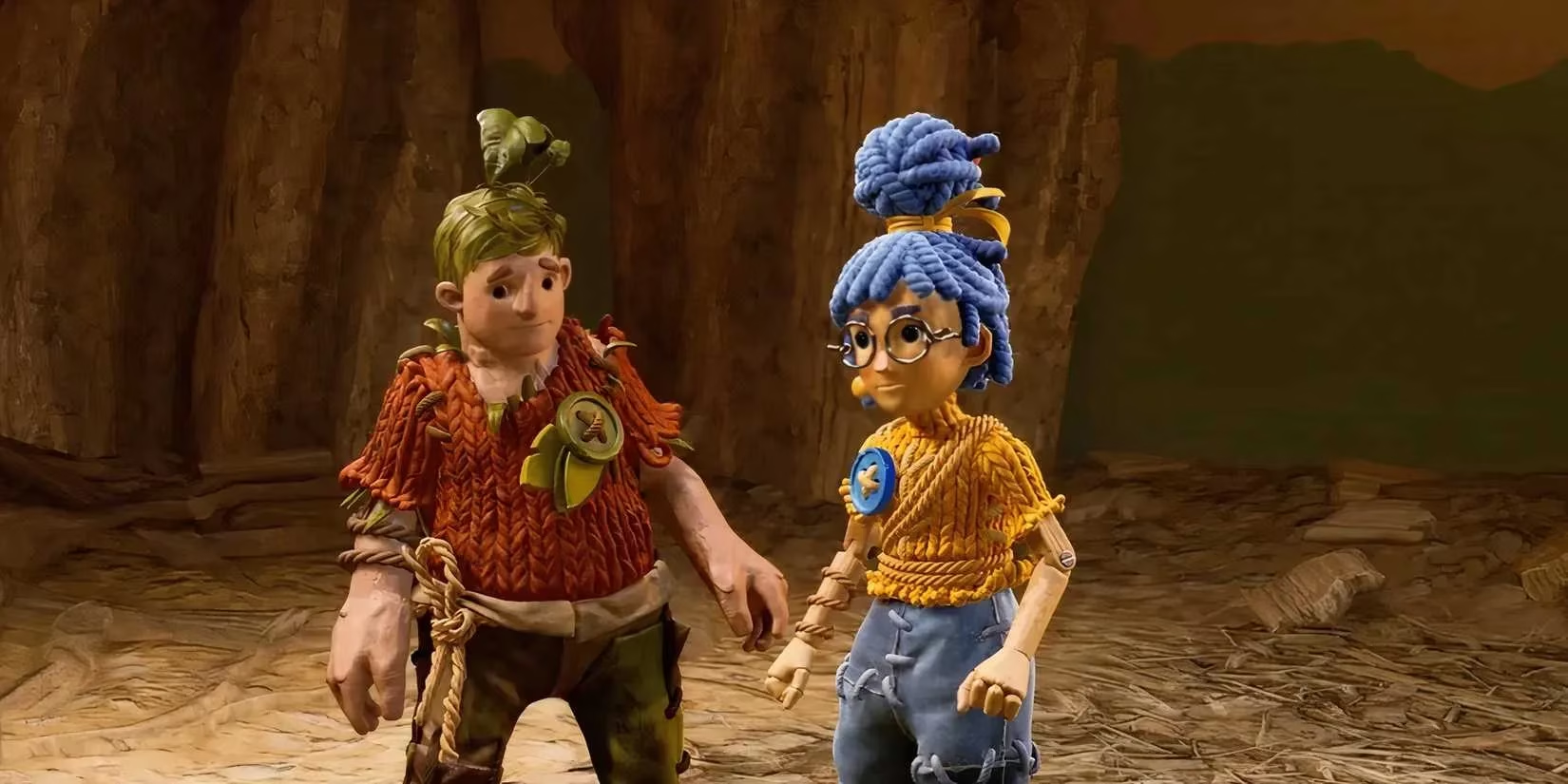
The genius of It Takes Two was its perfect difficulty balancing act. Here's how it broke down:
| What Made It Work | Why It Mattered |
|---|---|
| Short, varied gameplay segments | No single challenge overstayed its welcome |
| Clear, intuitive mechanics | Minimal "gamer knowledge" required |
| Shared objectives with individual roles | Both players felt equally important |
| Constant introduction of new ideas | Kept things fresh and exciting |
Don't get me wrong—there were moments of frustration. I distinctly remember thinking, "Okay, this Diablo parody level is cool and all, but my wife is struggling with basic jumping!" But the game's pacing was its secret weapon. Just when something started to feel too difficult, we'd move on to something completely different. Those moments where I had to complete my section, then physically swap controllers to do hers? Few and far between, thank goodness!
The Split Fiction Conundrum: Bigger, Bolder... But Better?
Fast forward to 2026, and Hazelight Studios is back with Split Fiction, their spiritual successor to It Takes Two. The trailers look absolutely insane—we're talking:
-
Characters sliding on motorbikes while shooting laser guns at giant bosses 🏍️💥
-
Zero-gravity combat with whip swords (yes, really) 🌌⚔️
-
Mounted obstacle course navigation 🐎
-
Stealth sequences that look straight out of a spy thriller 🕵️♂️
And my immediate reaction? "Holy crap, that's awesome!" followed immediately by "My wife will never be able to do this." And if I'm being honest, your partner probably won't either (no offense!).
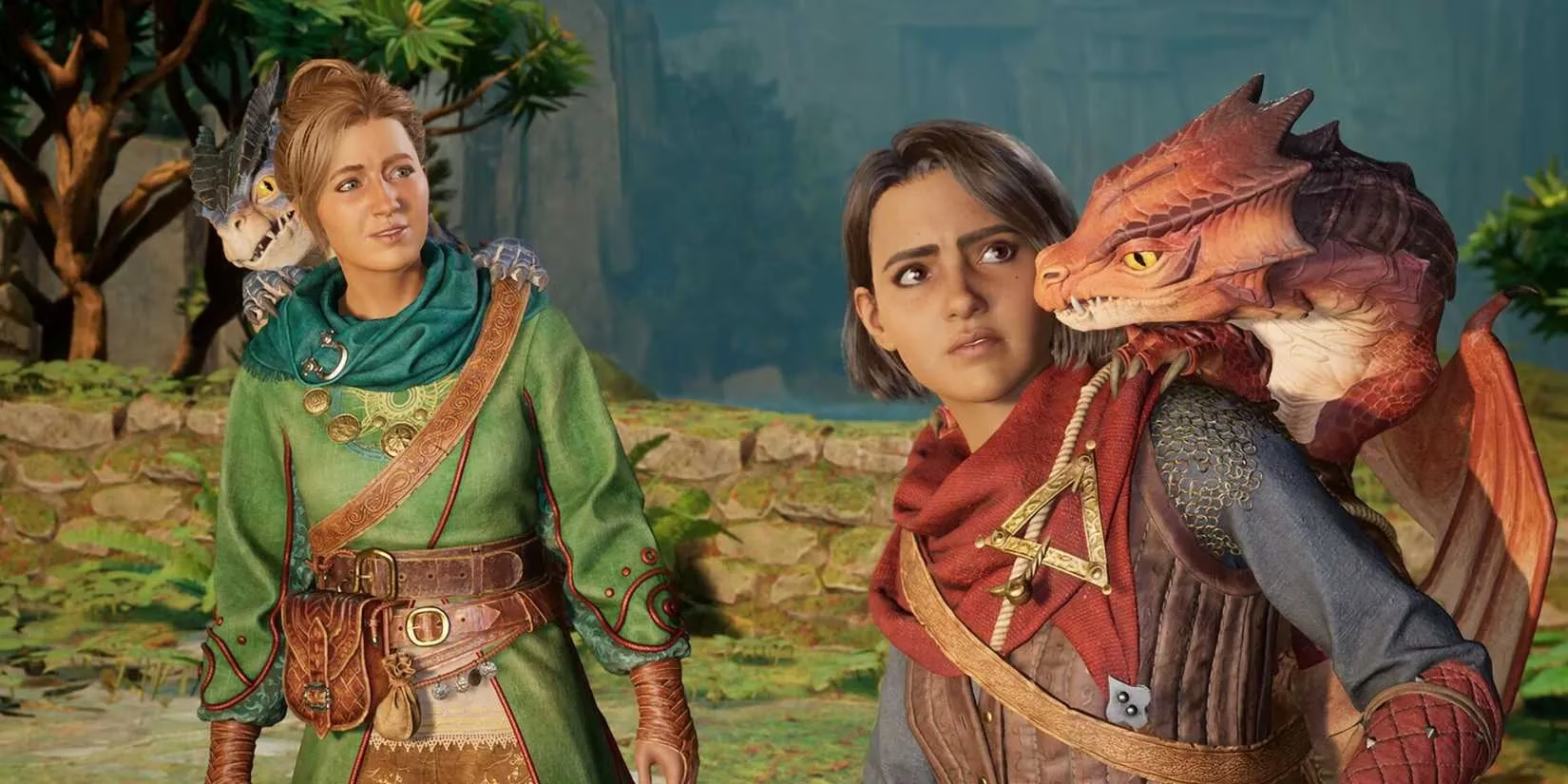
What Has Me Worried (And Hopeful)
It Takes Two threw everything but the kitchen sink into its design. With so many genres and gameplay styles already mashed together, how does a sequel stand out? The obvious answer seems to be: go bigger, go bolder, push everything to eleven. But at what cost? Here's my personal pros and cons list for Split Fiction:
The Good News:
-
Side quest structure - Unlike It Takes Two's linear progression, Split Fiction features optional side content where most of the crazy activities happen. Too tough? Just skip it! 🙌
-
Symmetrical gameplay - Many challenges appear to have both players doing the same thing, rather than specialized roles. This means one player can carry more easily without controller-swapping gymnastics.
-
Hazelight's track record - These are the same folks who gave us Brothers: A Tale of Two Sons, A Way Out, and It Takes Two. They basically invented modern narrative co-op gaming.
The Concerning Part:
-
Complexity creep - Laser guns? Whip swords? Zero-gravity physics? That's a lot to ask from someone who still occasionally jumps off cliffs by accident.
-
The "more is better" trap - Sometimes sequels add complexity where simplicity was the original's strength.
-
The skill gap danger - What happens when one player is pulling off Matrix-style moves while the other is still learning to walk and jump simultaneously?
My Personal Wishlist for Split Fiction
As someone who's been through the co-op trenches, here's what I'm hoping to see when Split Fiction drops:
-
Scalable difficulty - Not just "easy mode," but smart adjustments that help less experienced players without dumbing things down for veterans
-
Clear communication tools - Better ways for the "gamer" to guide the "non-gamer" without resorting to "No, your OTHER left!"
-
Meaningful assist options - Think Celeste's assist mode, but for co-op
-
That magical pacing - The same brilliant rhythm of It Takes Two that knew exactly when to introduce, challenge, and then move on
The Bottom Line
Look, I'm still ridiculously excited for Split Fiction. It's sitting pretty high on my "Most Anticipated of 2026" list, especially since it's already gone gold and has a solid March 6 release date. The shared experience of playing through It Takes Two with my partner created some of my favorite gaming memories, and I'm protective of that magic.
What I want from Split Fiction isn't just a harder It Takes Two—I want a better one. I want that same magical balance that made gaming accessible to my non-gamer wife while still being engaging for me. I want those "aha!" moments when we finally solve a puzzle together, and those triumphant high-fives when we beat a tough boss.
Hazelight has proven they understand co-op gaming like no one else. They took us from the emotional journey of Brothers, through the prison break tension of A Way Out, to the relationship therapy disguised as platforming in It Takes Two. Now, with Split Fiction, they're swinging for the fences. Here's hoping they hit another home run that everyone—gamers and non-gamers alike—can enjoy together. Because at the end of the day, that's what co-op gaming should be about: shared experiences, laughter, and maybe just a little bit of friendly (or not-so-friendly) competition. Game on, folks! 🎮✨