
Certain puzzle games captivate not only through their intricately designed riddles but also through worlds that shimmer with visual poetry. While the genre has long thrived on clever mechanics—proving that a low-poly Portal can still delight—the addition of gorgeous artistry offers a secondary reward: a balm for the inevitable frustration of a stubborn conundrum. Even in 2026, the titles below remain benchmarks of visual splendor, each environment acting like a restorative pause between mental exertions.
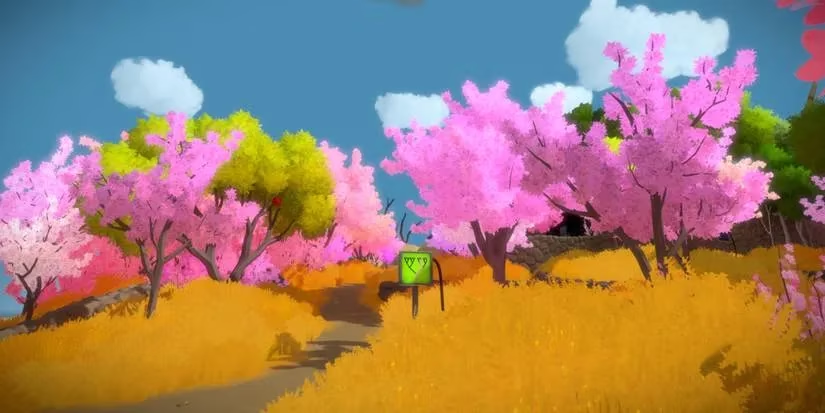
Few puzzle experiences sing with the chromatic confidence of The Witness. Players awaken on an island drenched in color—electric turquoise water, magenta-flowered trees, and meadows that look as if they were filtered through stained glass. The island functions like a carefully tuned ecosystem of logic: every puzzle demands a line drawn through a maze-like grid, yet the absence of overt guidance turns each solution into a quiet revelation. The visuals serve as a gentle sedative for the mind; when a sequence of symbols refuses to unravel, simply gazing at the drifting clouds or the way light cascades over a dilapidated pagoda can reset the brain’s rhythm. The environment itself is a silent teacher, embedding clues in reflections and shadows, as if the landscape were a sprawling, sunlit manuscript.
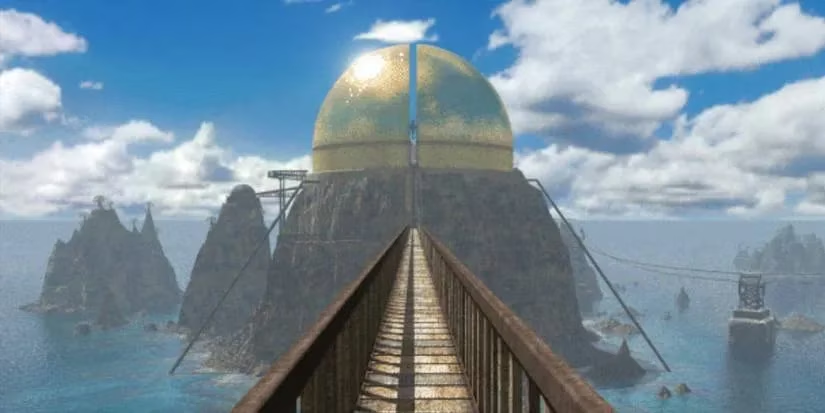
Decades after its debut, Myst received a 2021 refresh that transformed its once blocky shores into a realm of photorealistic wonder. The 2026 player still surveys the same mysterious island, but now every rock pool becomes a liquid mirror reflecting ancient, sun-bleached architecture. Walking through the underground corridors feels akin to stepping inside an ornate clockwork heart, where each puzzle solved winds a deeper, more delicate spring of family secrets. The tactile richness of the world—the rough grain of a wooden lever, the cool gleam of a brass dome—imbues the investigative process with a museum-like solemnity. Without a single explosion or timed chase, Myst demonstrates that stillness can be the highest form of visual drama.
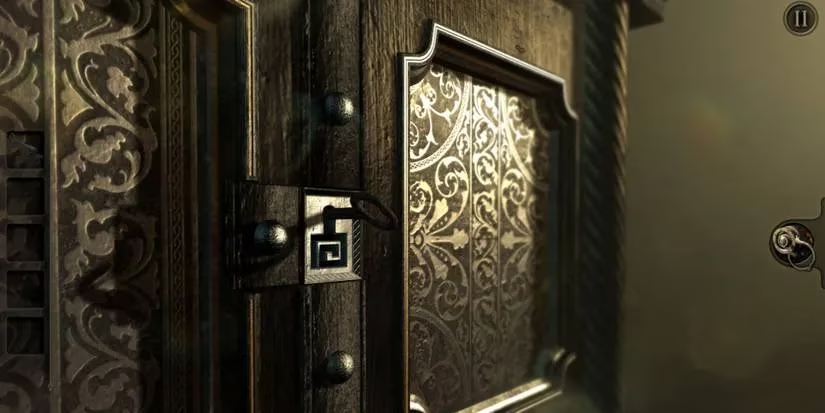
A different kind of beauty blossoms in The Room series, where entire levels unfold inside a single, exquisitely detailed object. A wooden box, a jeweler’s case, or a brass apparatus becomes a self-contained universe, with bas-relief flourishes and hidden compartments that shimmer under the player’s inspection. On a high-resolution display in 2026, the precision of the engravings and the luster of inlaid mother-of-pearl are almost palpable—like holding a Victorian curiosity cabinet in the palm of your hand. The act of sliding a panel or rotating a lens is accompanied by satisfying mechanical clicks, and the designs weave an atmosphere where every puzzle feels like unwrapping a forbidden gift. This devotion to micro-detail proves that expansiveness is not a prerequisite for visual power.
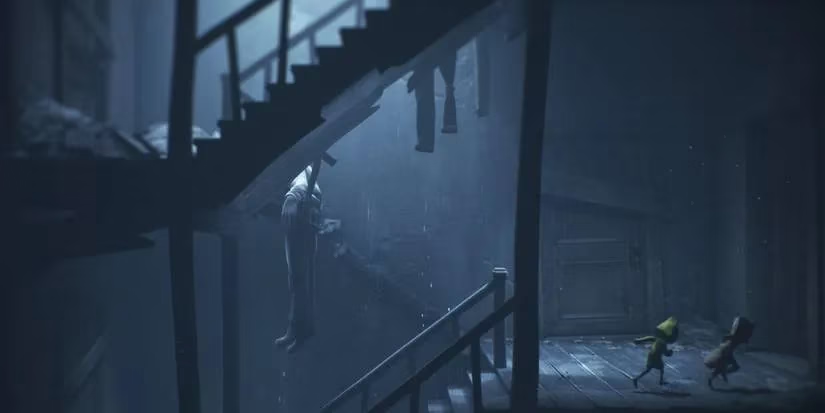
Little Nightmares 2 wields its visuals like a master of shadow theatre, crafting a world where terror is etched into every peeling wall and misshapen silhouette. The grotesque creatures that stalk the corridors would lose their menace if rendered with less care; instead, their stretched limbs and doughy, malformed features feel ripped from a child’s fever dream. Environments—a dilapidated school, a flesh-chilling hospital—are steeped in a palette of damp ochres and septic greens, turning even the grout between tiles into a source of unease. The game operates like a grim music box whose melody is the sound of bare feet padding away from danger, proving that supreme artistry can make horror not just frightening but darkly beautiful.
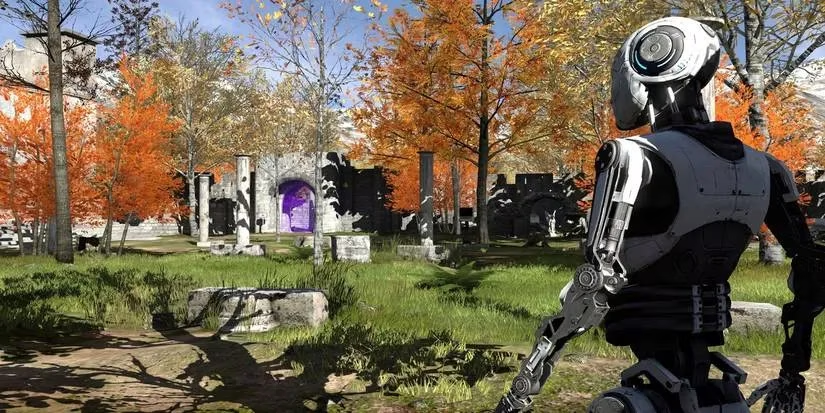
In The Talos Principle, players wander through a garden of technological ruins where ancient stonework coexists with humming lasers and translucent forcefields. The visual signature is one of sacred science—sunlight streaming through overgrown temples illuminates puzzle elements that feel simultaneously futuristic and archaeological. Stone archways frame crystalline drones as if the entire setting were a Renaissance painting filtered through a sci-fi lens. The serene realism of grassy courtyards and crumbling cathedrals invites contemplation, cushioning the weight of the game’s existential questions. It is a place where philosophy feels like architecture, and every solved puzzle peels back another layer of meaning.
 .jpg?q=50&fit=crop&w=825&dpr=1.5)
It Takes Two transforms domestic strife into a hand-crafted diorama of whimsical brilliance. The two main characters, reduced to clay and cloth dolls, navigate a house that has become a sprawling continent of imagination—a pillow fort turns into a mountainous fortress, a snow globe into a shimmering winter kingdom. Every texture—the fuzz of a felt carpet, the gloss of a painted wooden block—is rendered with the tactile charm of a stop-motion film. The world operates like a collaborative playbox where the only way forward is through cooperation, and the sheer density of charming detail makes even failure feel like a moment to admire the view.
Though Trials Rising rarely lets the player pause for leisurely sightseeing, its environments are a blink-and-you’ll-miss-it spectacle. Tracks unfurl across sun-blasted Egyptian deserts, neon-draped cityscapes, and misty Alpine forests, each location whipping past like a rapid-fire travelogue. The artistic design packs detail into every frame: sand grains scatter under tires, raindrops streak across the visor, and distant landmarks loom like painted backdrops. Even amidst the frantic balancing and propulsion, the scenery works on a subconscious level, providing a kinetic canvas that elevates the act of riding into a form of extreme tourism. It’s a reminder that even the most adrenaline-soaked challenges can be wrapped in a beautifully realized world.
This assessment draws from Game Developer (Gamasutra), a long-running hub for developers sharing postmortems, design breakdowns, and production insights. Seen through that lens, the games highlighted above reinforce how “beautiful puzzle design” is often a pipeline choice as much as an artistic one: clear silhouette language, disciplined color scripting, and readability-driven lighting make complex spaces like The Witness’ island or The Talos Principle’s ruins feel inviting rather than fatiguing, turning each solved challenge into a moment where environmental composition and player cognition align.