
As I sit here in 2026, reflecting on the gaming landscape, I can't help but be completely awestruck by the launch of Split Fiction. I remember the day the news broke; it wasn't just a successful release, it was a seismic event that redefined what we thought possible for a strictly co-op, narrative-driven game. Coming from Hazelight Studios, the team behind the beloved It Takes Two, expectations were sky-high. But who could have predicted that their latest offering wouldn't just meet those expectations but utterly shatter them right from the starting gate? The numbers, frankly, were staggering. In its very first day on Steam, Split Fiction achieved a concurrent player record that more than doubled—and was on the cusp of tripling—the peak of its legendary predecessor. This wasn't just beating a record; it was launching a new benchmark for the genre.
The Numbers That Told the Story
Let's talk about those cold, hard stats, because they tell a story of unprecedented engagement. According to SteamDB, Split Fiction's concurrent player record skyrocketed to 197,434. Let that number sink in for a moment. Now, compare it to the already-impressive peak of 71,039 players for It Takes Two. We're talking about an increase of over 178%! I recall watching the community forums, like ResetEra, light up with disbelief. A user named AshenOne had initially highlighted the comparison, and even in the hours after their post, the record kept climbing. There was this palpable, electric sense that the 200,000 player barrier wasn't just a possibility—it was an inevitability waiting to happen over that launch weekend. And you have to ask yourself: what drives nearly 200,000 people to coordinate and log into the same niche two-player game simultaneously?
Breaking Down the Barrier to Play
This is where the genius of Hazelight's design philosophy truly shines. A narrative-driven game that mandates a partner has an inherent, massive hurdle. You can't just buy it and jump in solo; you need to convince a friend, a partner, or a family member to join you on this journey. So, how did Split Fiction overcome this? The answer lies in a returning, player-friendly feature: the Friend's Pass. This system is nothing short of revolutionary for co-op gaming. It allows one player who owns the game to invite a friend to download a free pass and play the entire experience together. This single decision effectively halves the financial barrier for a pair to play. Think about it—instead of needing two full purchases, only one is necessary. This isn't just good business; it's a profound understanding of social gaming. It acknowledges that fun is shared and removes the friction that often prevents those shared experiences from happening.
Beyond the Numbers: Critical and Player Acclaim
But a successful launch isn't just about player counts; it's about the experience those players have. And here, Split Fiction didn't just succeed—it excelled. The game opened on Steam to an "Overwhelmingly Positive" rating from user reviews. This immediate and passionate player response is arguably more telling than the concurrent numbers. It signifies that the game wasn't just attracting clicks; it was delivering joy, compelling stories, and memorable cooperative gameplay that resonated deeply. Furthermore, it managed to secure an overall higher critical review score than It Takes Two, a game that itself had swept awards and captured hearts globally. This dual triumph in both mass appeal and critical depth is a rare feat. It proves that Split Fiction wasn't a hollow viral phenomenon but a meticulously crafted experience that lived up to, and surpassed, its monumental hype.
The Lasting Impact and Legacy
Looking back from 2026, the launch of Split Fiction was a watershed moment. It demonstrated several key truths about the modern gaming market:
-
The Power of Trust: Hazelight Studios built immense goodwill with It Takes Two and A Way Out. Gamers trusted them to deliver another masterpiece, and that trust was rewarded spectacularly.
-
Social Features are Game-Changers: The Friend's Pass model should be studied by every developer looking to make a co-op game. It turns a potential obstacle into the game's greatest marketing tool—word-of-mouth between friends.
-
Narrative and Co-op are a Potent Mix: The idea that deep, story-rich games can't achieve blockbuster numbers was彻底 dismantled. Players are hungry for shared, emotional journeys.
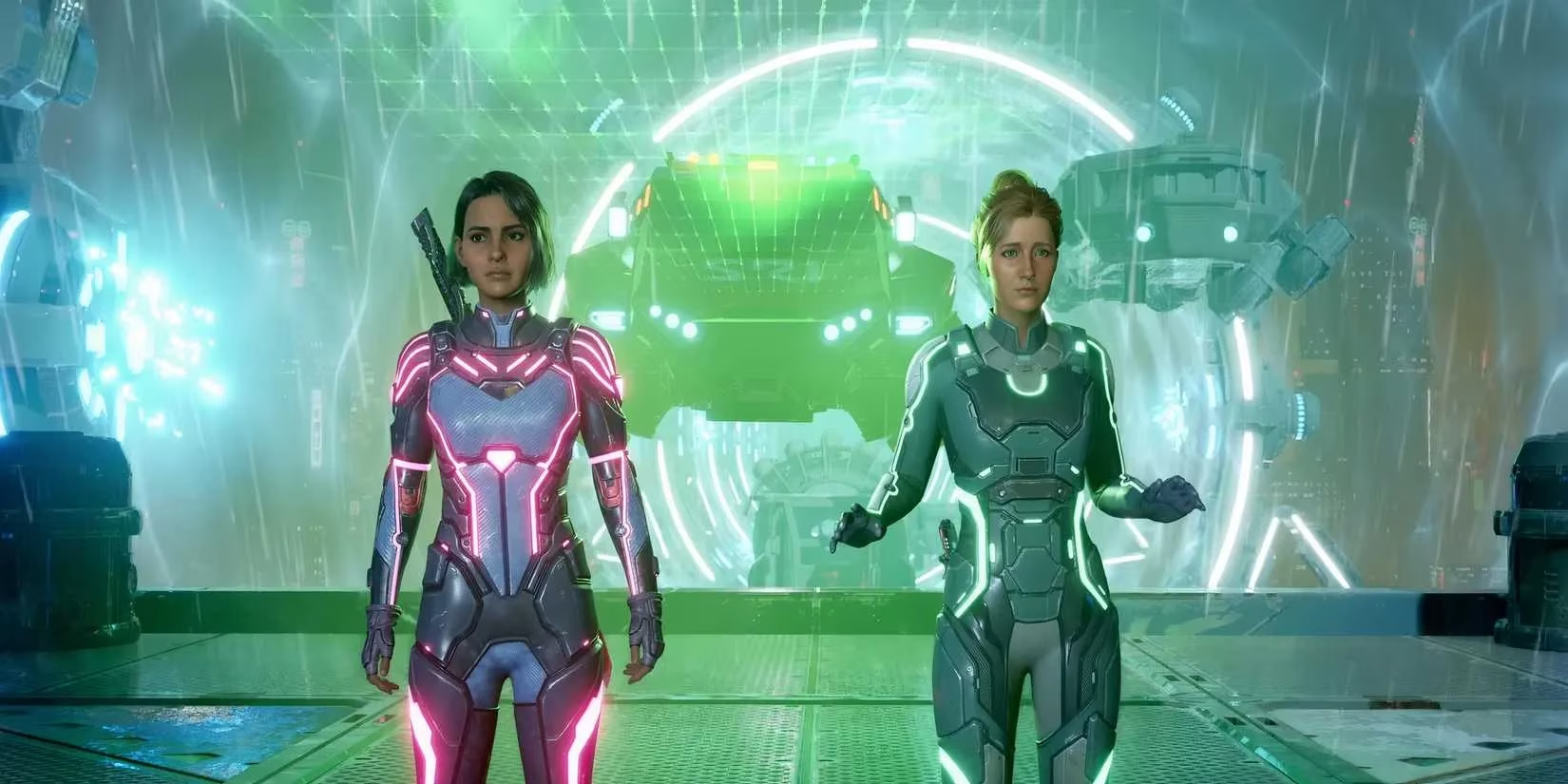
The game's launch didn't just break records; it broke expectations. It showed that in an era of massive open-worlds and competitive live-service titles, there is a colossal, vibrant space for a tightly focused, beautifully crafted cooperative adventure. The image of Zoe and Mio, back-to-back, ready for their intertwined story, became more than just key art—it became a symbol for a new peak in collaborative play. So, was Split Fiction a success? That feels like an understatement. It was a declaration, a celebration, and a new high-water mark that the industry is still admiring years later.