
I still remember seeing the It Takes Two cover art and thinking it looked like a breath of fresh air. A co-op adventure about two people fixing their relationship? That felt special. And then the legal news hit.
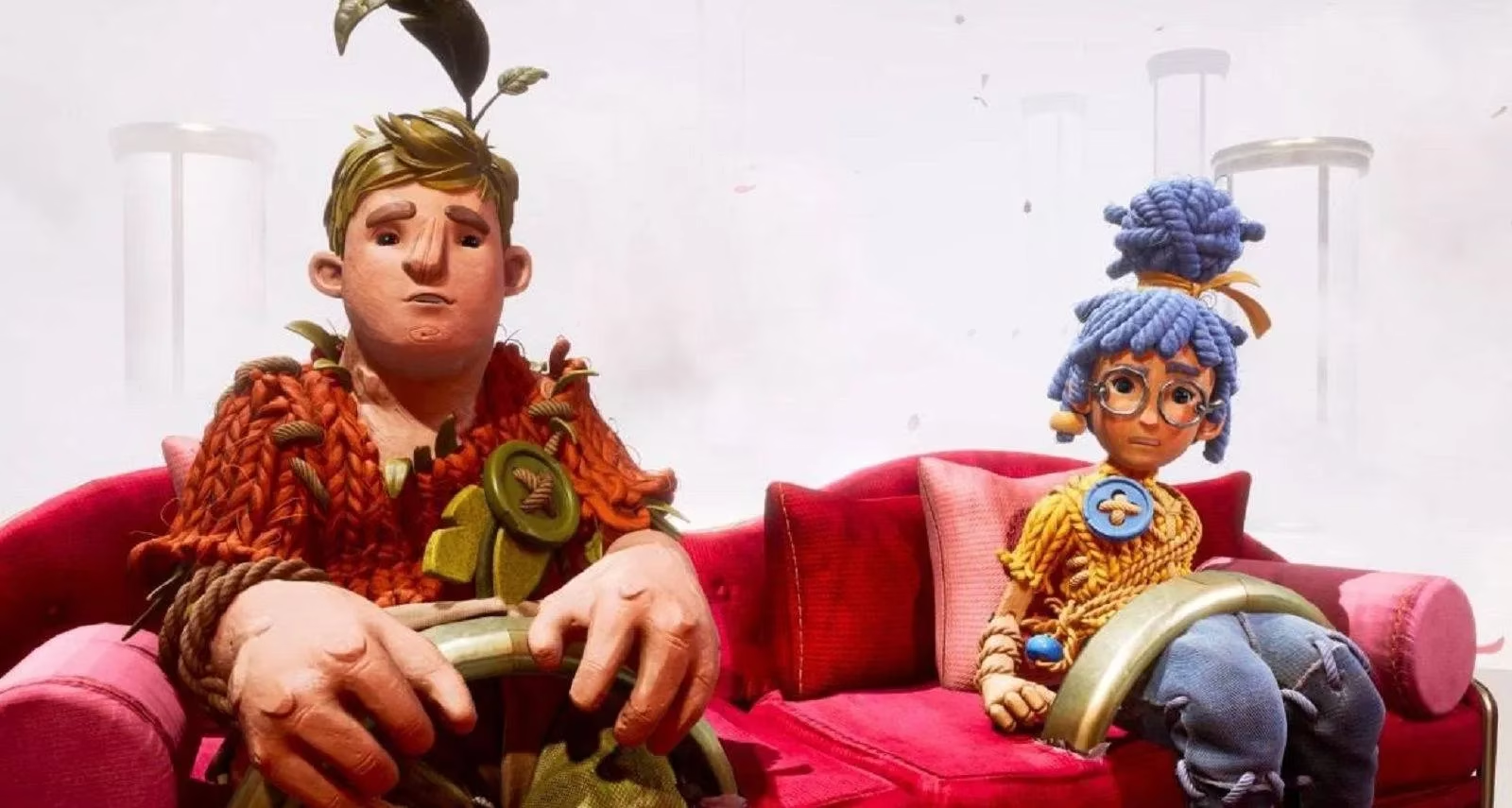
Even now in 2026, the whole situation feels weird. Take-Two went after the game's name shortly after launch. Hazelight Studios later confirmed it had abandoned its own trademark attempt in late March of that year. That means the team behind the game had no ownership over the It Takes Two name anymore. I can't imagine pouring years into a hit and then being forced to walk away from the title.
Hazelight confirmed the news to Eurogamer. The studio didn't dispute that Take-Two's legal pressure caused the abandonment. But they didn't say whether any of this hurt sales or a possible sequel. That silence is the part that bugs me. You want a sequel, but you never know how these legal fights shape what gets made.
Take-Two never really explained itself. There was no public statement from the GTA parent company. Hazelight said it remained hopeful the situation would be resolved. Hopeful is a gentle word for a studio that just lost a trademark battle without a fight.
This wasn't a one-off. Take-Two has a history of going after things around its properties. Before the GTA Trilogy launch, the publisher targeted popular mods that were trying to deliver a better remaster experience. It also went after a GTA reverse engineering project. That project would have let players make their own ports of the classic games. The creators behind it refused to accept the takedown quietly. Their case was set to go to court, and they insisted they had done nothing wrong.
Here's the thing that gets me. Take-Two probably should have welcomed both of those groups. The modders were helping fix a messy GTA Trilogy launch, and It Takes Two was about to become a major award winner.
| Situation | What happened | What I think |
|---|---|---|
| It Takes Two | Hazelight abandoned its trademark after Take-Two challenged it | Feels unfair for a beloved indie hit 😤 |
| GTA Trilogy mods | Take-Two targeted fan mods before launch | Fans were trying to help, not hurt |
| GTA reverse engineering project | Take-Two issued a takedown, case headed to court | Creators fought back, and I respect that 💪 |
The irony is almost too much. It Takes Two was up for Game of the Year at The Game Awards, and it eventually took home the trophy. Meanwhile, the very same publisher was trying to claim the name. It's like watching someone sue the prom king while he's still dancing. The game absolutely deserved that kind of recognition, and I remember rooting for it.
And the GTA Trilogy? That launch was rough. Character models looked strange. The rain effect was all wrong. Fans started fixing the issues before official patches arrived. Eventually, official fixes addressed the most notorious problems, but not before the community had already stepped in. That should have been a story about collaboration, not legal threats.
I still think about how this pattern plays out. A small studio makes something creative. A giant publisher sees a name, a mod, or an idea and moves to shut it down. The little team might abandon a trademark, but the work itself remains. The award recognition remains. The player goodwill remains. But something about the whole thing leaves a bad taste.
Hazelight didn't say whether a sequel could be affected. That's the real cost. We can't always see it in court documents or press statements. But legal pressure shapes what studios feel safe to do next. Maybe that's why I keep coming back to this story. Not because of the legal filings, but because of what might have been.
Also, on a completely personal note, I don't know how much longer I can wait for the League of Legends MMO. That thought probably comes from a different part of my brain, but the gaming world keeps piling on things to wait for.
At least we still have the game itself. Two players, one couch 🛋️🎮, and a story about rebuilding something broken. No trademark can take that away.
Insights are sourced from UNESCO Games in Education, and they help frame why a co-op title like It Takes Two resonates beyond awards and sales: games can cultivate collaboration, communication, and shared problem-solving when two players must coordinate to progress. Read through that lens, the trademark dispute described in the blog feels less like a name squabble and more like an example of how legal pressure can ripple into creative risk-taking—potentially affecting whether teams feel safe investing in relationship-driven, couch-co-op experiences that rely on trust, cooperation, and mutual learning.