
When most gamers think of platformers, their minds typically conjure images of vibrant worlds, cheerful music, and iconic mascots like Mario or Sonic leaping across colorful stages. For decades, the genre has been synonymous with family-friendly entertainment. However, a fascinating and substantial subgenre has quietly flourished in the shadows, one that masterfully wraps mature, unsettling, and often deeply melancholic narratives within deceptively charming aesthetics. These games prove that a cute exterior can be a perfect vessel for exploring themes of grief, despair, and existential dread, creating experiences that linger long after the controller is set down. 🎮⚫
It Takes Two: A Co-op Comedy Masks Marital Collapse
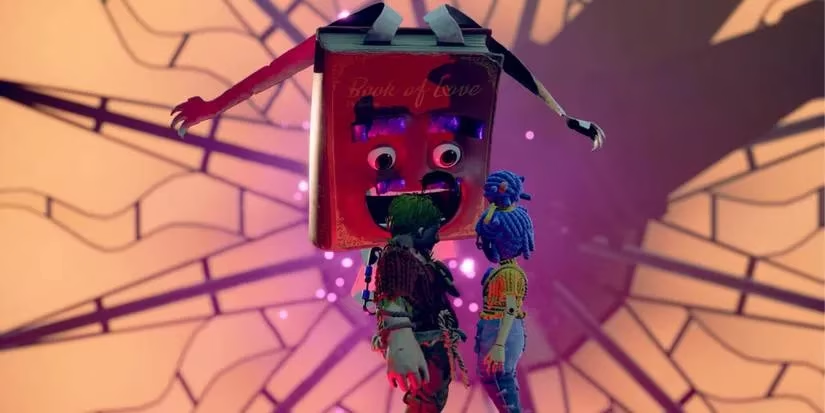
On the surface, It Takes Two is a vibrant, cooperative adventure brimming with inventive mechanics. Yet, its core is a raw examination of a crumbling marriage. The journey of Cody and May, a couple navigating divorce, is punctuated by moments of startling darkness. The most infamous scene—where the shrunken parents resort to brutally dismembering their daughter's cherished toy elephant, Cutie, to gain her attention—is a narrative gut-punch. It transforms the game from a whimsical romp into a poignant, and sometimes disturbing, metaphor for the collateral damage of adult conflicts. The game's playful mechanics become, at times, like watching a beautifully crafted music box that unexpectedly springs open to reveal a nest of sharp, complicated gears.
Ori's Luminous Beauty & The Swallowing Grief
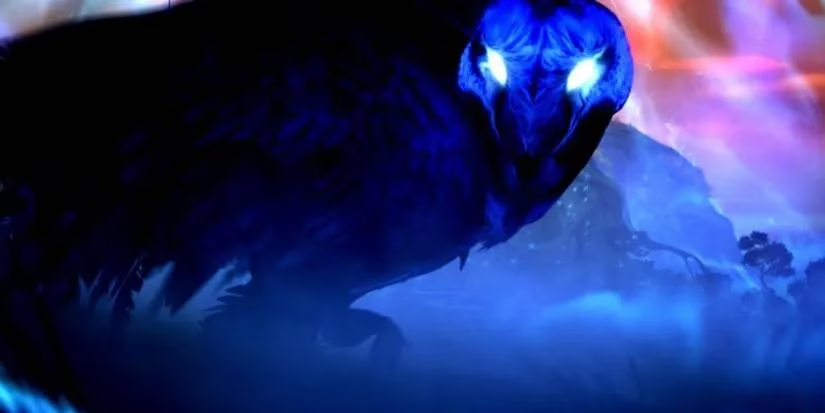
The Ori series is a visual and auditory masterpiece, often mistaken for a simple tale of light versus darkness. In reality, it's a profound exploration of loss and sacrifice. From the opening moments of Ori and the Blind Forest, where the titular spirit is orphaned, to the overarching blight affecting the land, the games are steeped in melancholy. The haunting beauty of locations like the Thornfelt Swamp serves as a backdrop for a story that deals with parental abandonment, environmental decay, and the heavy cost of renewal. The game's luminous art style acts like a fragile stained-glass window depicting a devastating storm; the beauty of the presentation makes the tragedy within even more resonant.
Cuphead's Devilish Deal
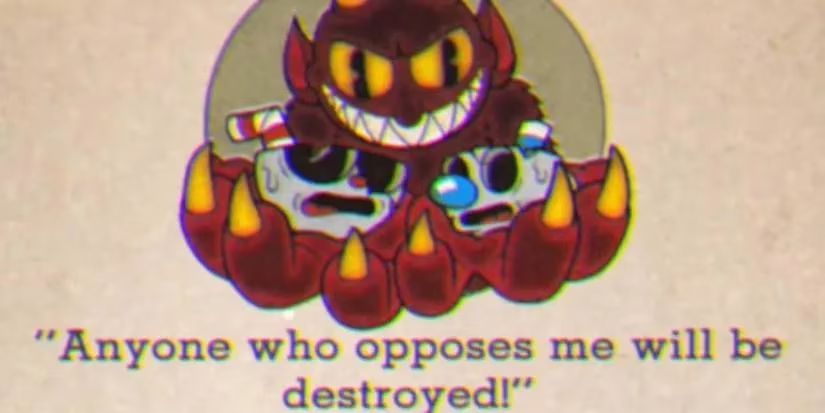
Cuphead's rubber-hose animation is a love letter to 1930s cartoons, creating an illusion of innocent, bygone-era fun. This illusion is meticulously shattered by its narrative. The titular brothers are not hapless heroes but compulsive gamblers who lose their souls to the Devil. Their quest to collect the contracts of other debtors is a frantic scramble to escape damnation. The game's punishing difficulty mirrors the inescapable nature of their pact. Its cheerful, jazzy soundtrack and bubbly visuals become a sardonic contrast to a story about addiction, consequence, and bargaining with cosmic evil. It’s a carnival ride that starts with cotton candy and ends in a hall of mirrors reflecting one's worst mistakes.
Portal's Aperture Science: A Lab of Lonely, Dark Humor
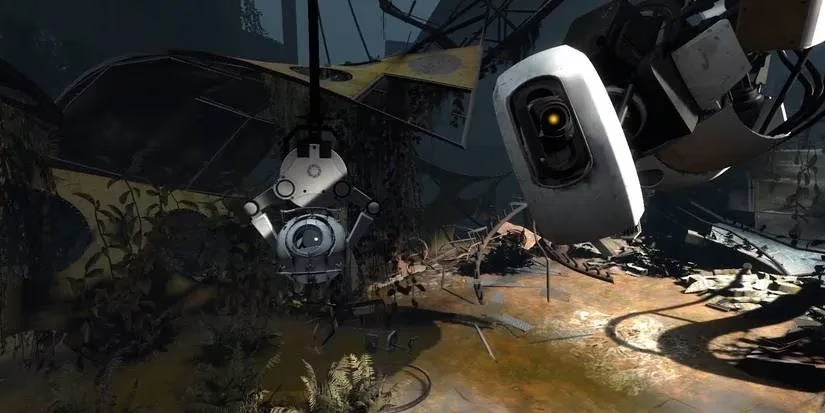
Portal 2 is celebrated for its brilliant puzzles and witty writing, but its humor is born from a profoundly bleak setting. The player, guided (or tormented) by the passive-aggressive AI GLaDOS, explores the ruins of the Aperture Science facility. The comedy stems from the reality that GLaDOS murdered nearly all the staff and now runs endless, deadly tests on the last human subject. The sprawling, decaying labs feel less like a puzzle chamber and more like the ossified remains of corporate hubris and scientific folly. The hidden story of Doug Rattmann, a surviving scientist who descended into madness, adds another layer of tragic isolation to this comedic masterpiece.
Hollow Knight: A Kingdom Rotting From Within
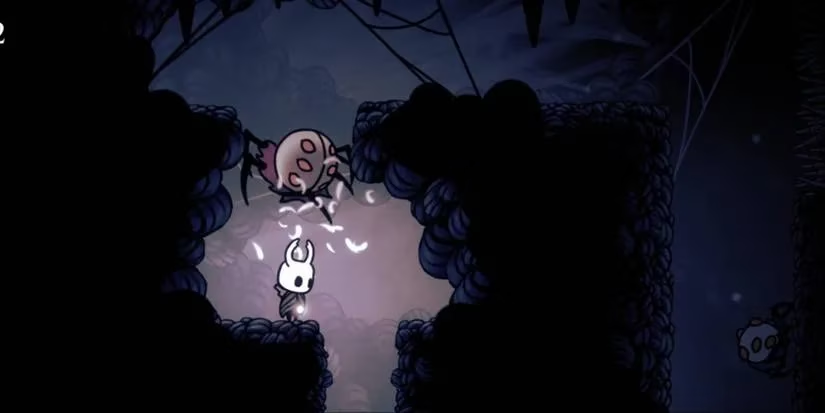
Hollow Knight presents a world of adorable, bug-like creatures, but its lore is a tapestry of cosmic horror and societal collapse. The kingdom of Hallownest is plagued by an Infection—a radiant, consuming force that strips beings of their will and mind. The player, a vessel of Void, navigated ruins filled with the husks of former citizens. Areas like the claustrophobic, spider-infested Deepnest or the lair of the mimic creature Nosk are exercises in pure dread. The game’s narrative, discovered through environmental clues and cryptic dialogue, reveals a tragic cycle of failed containment, sacrificed children, and a desperate, fading monarch. Its cuteness is merely the chitinous shell over a deeply rotten core.
Limbo & Inside: Silent Journeys Through Distorted Realities
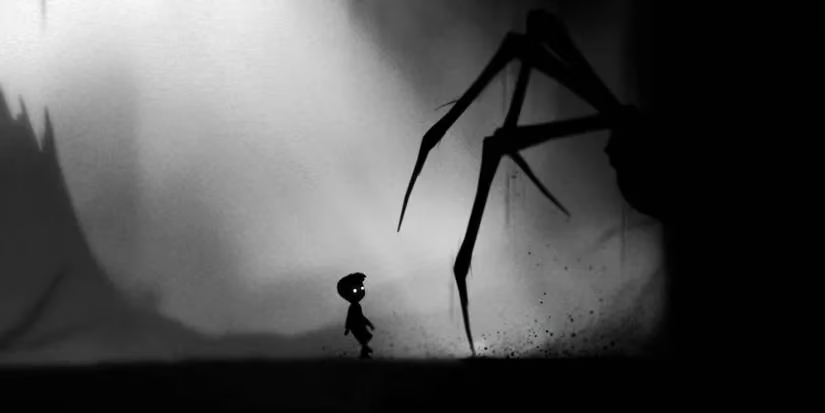
Playdead's Limbo and Inside are masters of minimalist horror. Limbo casts players as a small boy navigating a monochromatic, lethal purgatory. With no dialogue, the story is told through relentless environmental threat: bear traps, giant spiders, and other children turned hostile. Its pervasive atmosphere of loneliness and inevitable, gruesome death makes it a haunting experience. Inside, its spiritual successor, expands the dread into a dystopian saga. The boy’s flight from faceless pursuers evolves into a bizarre narrative involving mind control, grotesque body horror, and a bleak, ambiguous conclusion. These games treat their young protagonists with a chilling indifference, like leaves caught in a vast, uncaring industrial machine.
Bramble: A Folklore Fairytale Turned Feral
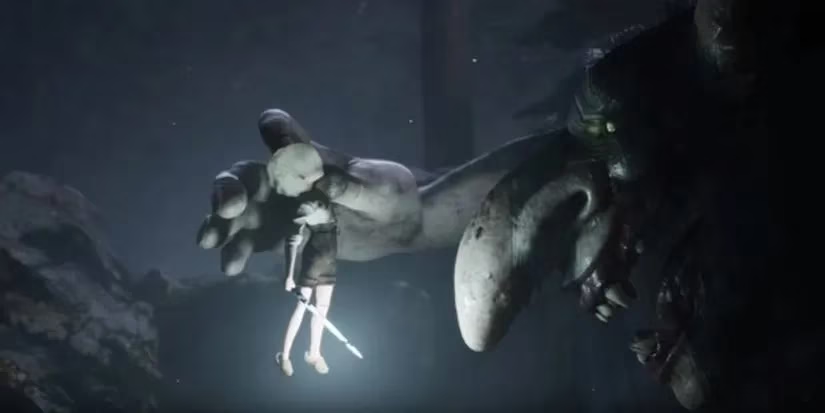
Drawing from Swedish folklore, Bramble: The Mountain King initially appears to be a mystical adventure. This illusion is quickly dispelled as young Olle searches for his sister in woods teeming with creatures from Nordic myth turned into nightmares. The game doesn’t shy away from visceral horror, presenting monstrous entities that dispatch Olle in shockingly brutal ways. It transforms familiar folk tales into a harrowing coming-of-age story where innocence is violently stripped away by the very fabric of the mythical world.
Little Nightmares: A Childhood Viewed Through a Terrifying Lens
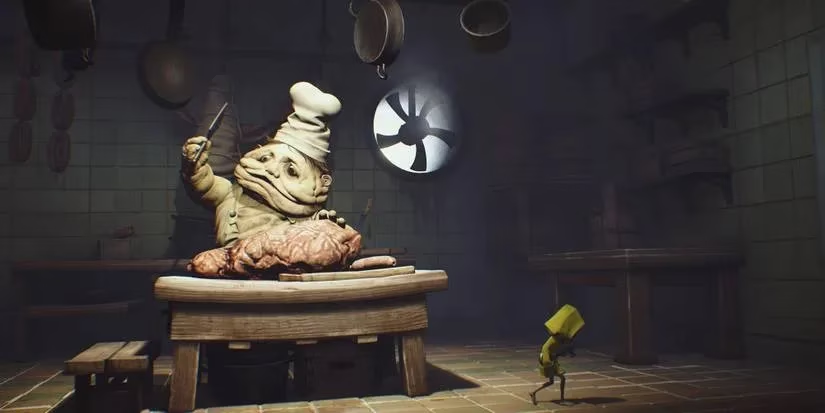
The Little Nightmares series perfects the formula of vulnerable children in a grotesque, oversized world. Controlling the small, raincoat-clad Six or the boy Mono, players evade predators like the long-armed Janitor or the thin, hungry Guests. The horror is amplified by the oppressive scale and the mundane yet twisted nature of the threats. These games explore themes of consumption, corruption, and betrayal, suggesting a world where childhood itself is a resource to be exploited. The cute, miniature protagonists are like delicate paper dolls tossed into a furnace of adult grotesquerie.
Castlevania: Symphony of the Night - The Gothic Pioneer
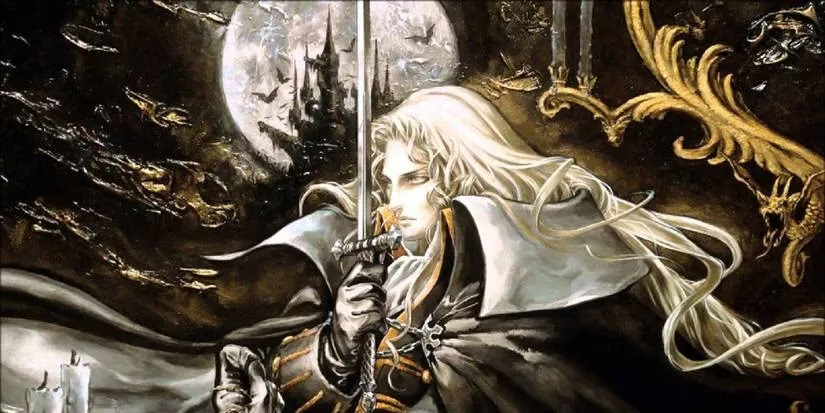
No discussion of dark platformers is complete without Castlevania: Symphony of the Night. As a cornerstone of the Metroidvania genre, it draped its exploratory gameplay in a rich Gothic horror aesthetic. Exploring Dracula’s ever-shifting castle, battling classic monsters, and uncovering a familial drama rooted in immortality and damnation, it set a benchmark for atmospheric, story-driven platforming. Its legacy is a testament to how effective a brooding, vampire-haunted narrative can be when paired with precise, exploratory gameplay.
🕯️ Final Thoughts
This diverse collection of games demonstrates the incredible narrative range of the platforming genre. They leverage their often-charming visuals not to soften their dark themes, but to heighten the contrast and emotional impact. They prove that a game can feature a cute, jumping protagonist and still grapple with concepts of existential despair, profound loss, and moral ambiguity. For players looking to venture beyond the bright and breezy, these titles offer deep, emotionally complex journeys where the platforming challenge is matched by the weight of the story being told. The shadowy path through the platforming garden is, it turns out, filled with some of the most memorable and thought-provoking blooms. 🌸🖤