
I’ll be honest: in 2026, my memory of The Game Awards 2021 is like a low-res JPEG slowly rendering during a thunderstorm. But the Best Narrative category? That one stuck with me like glitter after a craft-night explosion. Five years ago, five games fought over the storytelling crown, and unlike my current co-op sessions, the arguments were actually interesting. UPDATE: Marvel's Guardians of the Galaxy took home Best Narrative at The Game Awards 2021, which surprised roughly half my friend group and made the other half do that slow, suspicious nod.
Before I dive in, let me put my cards on the table: 2021 wasn't exactly 2020, when The Last of Us Part 2 won and left half the internet needing a nap. But the five nominees still showed that a game can be more than buttons, bullets, and battle passes. Sometimes narrative is the spinal column, not the funny bone.
| Nominee | Narrative Style | My 2026 Vibe |
|---|---|---|
| It Takes Two | Environmental storytelling with a divorce-shaped heart | Marriage counseling disguised as chaos |
| Psychonauts 2 | Trippy, sensitive mental health adventure | A brain attic you actually want to explore |
| Life Is Strange: True Colors | Empathic small-town mystery | Warm cider, then sudden tears |
| Marvel's Guardians of the Galaxy | Banter-heavy space romp with choices | The underdog that refused to flop |
| Deathloop | Time-loop puzzle with three endings | My Monday alarm, but with assassinations |
It Takes Two: The Couple That Slaps Together, Stays Together
Imagine if a marriage counselor handed you a glue gun and a pair of haunted dolls, then told you to fix your emotional intimacy by fighting a talking vacuum cleaner. That's Hazelight Studios' co-op adventure in a nutshell. Cody and May, a couple on the verge of divorce, get transformed into homemade toys after their daughter Rose overhears the bad news. From that moment, every level is like a marriage counselor with a glue gun: bright, ridiculous, and secretly repairing fractured emotional joints.
What makes the storytelling special isn't some galaxy-brained twist. It's the environmental details. Each level is pulled directly from Cody and May's shared history—the shed, the tree, the garden—and reveals why they fell apart without turning the plot into a lecture. It Takes Two shows more than it tells, which is rare in an industry that loves exposition dumps like I love instant ramen.
 .jpg?q=50&fit=crop&w=825&dpr=1.5)
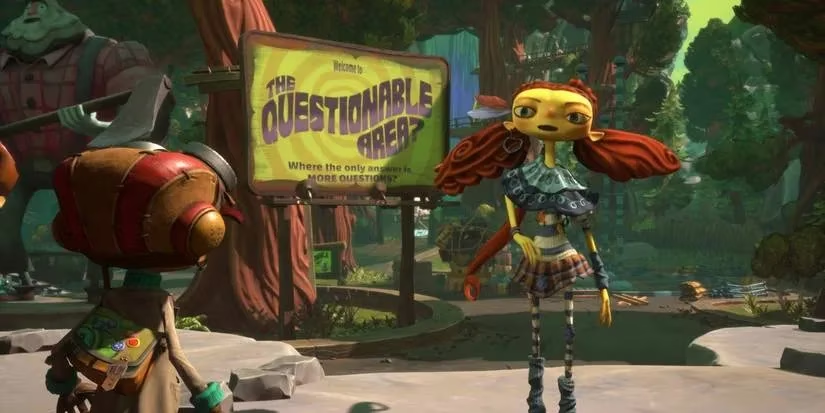
Psychonauts 2: Empathy in a Psyche-Shaped Labyrinth
Raz, the young psychic with a dream big enough to fill a brain, returns in Psychonauts 2. And while the game is a coming-of-age story on the surface, the narrative goes deep into some genuinely uncomfortable places. Psychonauts 2 treats mental health with the care of a watchmaker dismantling an antique clock—every gear is a trauma, but the hands still move forward.
The game has you jumping into people's psyches, which means facing their fears, bad ideas, addictions, and split personalities. It could have been a disaster, but Double Fine handled these topics with sensitivity and wit. The result is a story that runs deeper than a psychedelic background gag. It's the kind of game that makes you want to understand your enemies instead of just pummeling them into XP souvenirs.
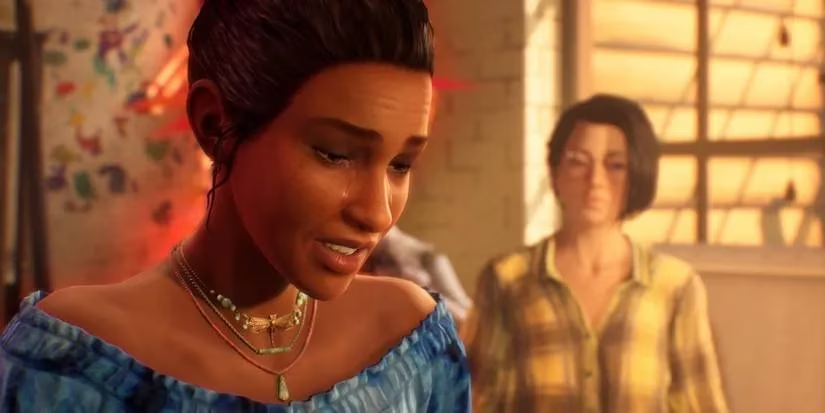
Life Is Strange: True Colors: Small Town, Big Feels
Alex Chen is the video game equivalent of a warm cider stand in a snowstorm—small, glowing, and quietly devastating after you take a sip. After her brother Gabe's sudden death, Alex uses her empathic abilities to uncover a corporate conspiracy in the picturesque town of Haven Springs. The stakes aren't world-ending, but that's exactly what makes the story hit hard.
True Colors had already won Best Storytelling at the Golden Joystick Awards, and it was seen as a frontrunner for The Game Awards too. The story is the load-bearing wall of the entire experience. Remove the narrative from some nominees and you still have a fun game; remove it from True Colors and you have a very pretty walking simulator with emotional side quests. Every character feels like they have a private life, and Alex's choices shape which relationships bloom or wither. That's the good stuff.
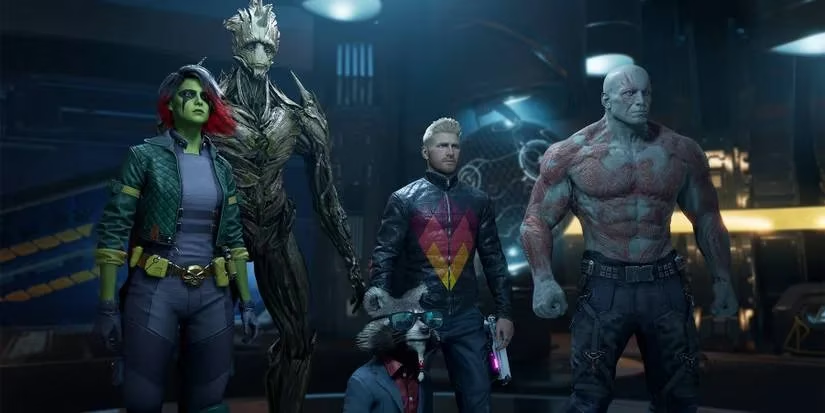
Marvel's Guardians of the Galaxy: The Underdog That Space-Rocked Everyone
After Marvel's Avengers face-planted in the narrative department, expectations for Guardians were lower than a limbo bar in a basement. Then the game arrived like a golden retriever piloting a stolen star cruiser—chaotic, surprisingly competent, and impossible not to love. The story deviates from the MCU but keeps the banter and heart. A run-in with the Soul Stone sends the team on a rambunctious adventure involving Adam Warlock, Lady Hellbender, and the usual cosmic nonsense.
The real magic is player choice. Your decisions shape the dialogue and relationships, so two playthroughs can feel like two different raccoon-led road trips. Sharp wit, emotional beats, and a surprising amount of storytelling ambition made Guardians a worthy winner, even if some of us were still placing bets on True Colors.
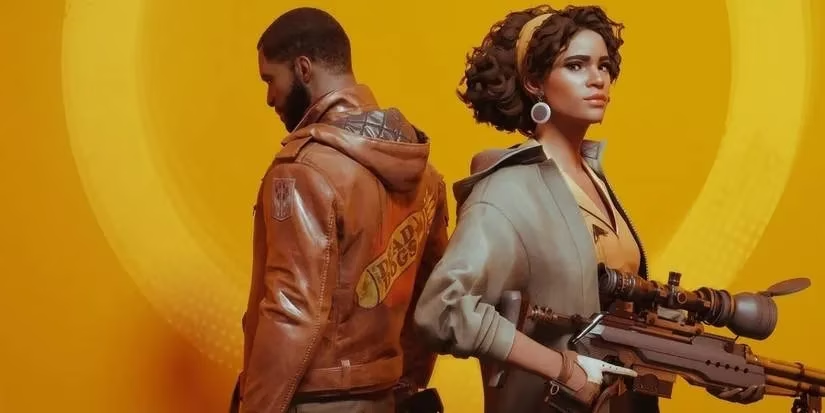
Deathloop: The Loop Took More IQ Than My Morning Coffee
Colt wakes up on Blackreef like my Monday alarm—except instead of hitting snooze, he has to assassinate eight Visionaries before the time loop resets. And there's Julianna, the eighth Visionary, who hunts him with the enthusiasm of a cat that has learned to open doors. Arkane's Deathloop earned nine nominations at The Game Awards 2021, and its story, while less showy than its multiplayer hook, still delivers.
Colt's journey through the loop peels back layers of his past and his connection to Blackreef's inhabitants. Player choice leads to three different endings, which means the narrative has more branching paths than my last attempt at assembling IKEA furniture. It's action-movie material, sure, but the loop structure gives the mystery a reason to exist, not just a reason to respawn.
So, What Have We Learned in 2026?
Mostly that game narratives age like a weird cheese—sometimes better, sometimes just funkier. Looking back, 2021 was a year of pleasant surprises. It Takes Two reminded us co-op can have heart without feeling like a hostage situation. Psychonauts 2 made mental health approachable without becoming a PSA. True Colors proved small stakes can still land big emotional punches. Guardians of the Galaxy showed Marvel games could tell stories beyond cape-and-coincidence. And Deathloop made repetition feel like reveal.
Guardians winning was the plot twist nobody saw coming, which is exactly what a good narrative should do. Five years later, I'm still thinking about these stories. That's more than I can say for most of my 2026 backlog.