
In the electrifying aftermath of the Grand Theft Auto 6 reveal, the gaming world stands on the precipice of a seismic shift. The mere glimpse of a modern-day Vice City has ignited a firestorm of anticipation, a fever pitch not seen in over a decade. Rockstar Games, after years of masterful silence, has unleashed a cinematic vision that promises a revolution in tone, scale, and reality. The sun-drenched, neon-soaked paradise of the 1980s is gone, replaced by a sprawling, breathing metropolis poised to dwarf everything that came before it. This isn't just a return; it's a total, glorious reincarnation.
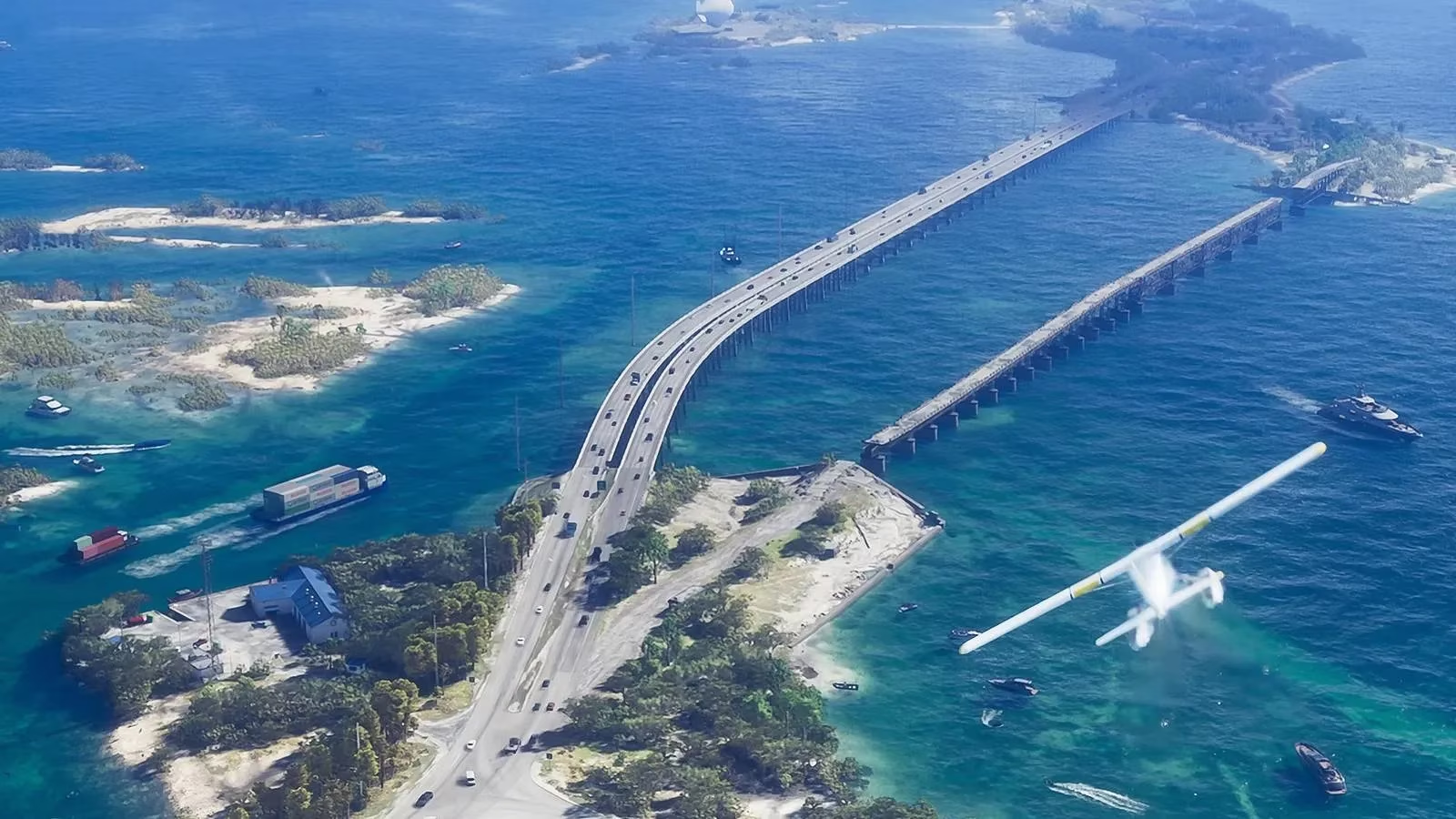
Let's be brutally honest: the original Vice City was a magnificent illusion. A masterpiece of atmosphere that made two slender strips of land feel like an empire. Tommy Vercetti's kingdom was built on style, soundtrack, and swagger, not square mileage. Fast forward to 2026, and that charmingly compact playground would feel like a postage stamp to players who have spent years getting lost in the gargantuan sprawl of Los Santos and Blaine County. The expectation is no longer for a city; it's for a world. Rockstar's recent pedigree with open-world design—from the dense urban canyons of GTA V to the vast frontiers of Red Dead Redemption 2—practically guarantees that the Vice City we remember is about to undergo a hyper-realistic, jaw-dropping expansion.
The Great Leap Forward: From 3D Nostalgia to HD Reality
To understand the magnitude of this change, one must grasp the chasm between Rockstar's universes. The transition from the 3D Universe (GTA III, Vice City, San Andreas) to the HD Universe (GTA IV, V) wasn't just a graphical upgrade; it was a philosophical overhaul. Liberty City was completely reborn, its layout, scale, and soul fundamentally altered. Vice City's return in GTA 6 represents the final piece of this grand unification. For the first time ever, fans will witness the relentless march of time within Rockstar's own continuity. Nearly 40 years have passed in-game since Tommy's reign. Think of the possibilities! 😲
-
The iconic Ocean View Hotel? Likely a luxury high-rise condo.
-
The Malibu Club? Probably a soulless corporate entertainment complex.
-
The Vice City Police Department? Upgraded with dystopian levels of surveillance tech.
Every landmark will carry the weight of history, every street corner whispering tales of a bygone, cocaine-fueled era. The city itself becomes a character, scarred and reshaped by decades of progress, corruption, and real estate development.
Size Matters: The Colossal Scale of a New Era
Rumors have swirled, and many have proven frighteningly accurate. The most tantalizing whispers suggest a map approximately 1.5 times the size of GTA V's already massive world. Let that sink in. This isn't merely padding out the original islands. This suggests one of two monumental approaches:
| Potential Approach | What It Means for Vice City | The Player's Experience |
|---|---|---|
| Complete Metropolitan Overhaul | The core city is radically expanded, with districts deepened, skylines raised, and neighborhoods fleshed out with unprecedented detail. | Getting from the beach to downtown becomes a genuine journey, a symphony of chaotic traffic, diverse pedestrians, and ever-changing vistas. |
| Expanded Territory Beyond the City | The iconic Miami-inspired core remains somewhat recognizable, but vast, new explorable regions—Everglades-style swamps, sprawling suburbs, offshore islands, or even parts of a fictional Florida—surround it. | The game offers a stark contrast between urban density and untamed wilderness, creating a dynamic playground for all manner of illicit activities. 🚗✈️🚤 |
Either path leads to a Vice City unrecognizable from its 1986 ancestor. The compact, curated experience is dead. In its place rises a living, breathing ecosystem where players can truly vanish. The scale will be so immense, so overwhelming, that discovering its secrets will feel like a personal odyssey.
Aesthetic & Cultural Revolution: Goodbye Pastels, Hello Modern Grime
The tone shift signaled in the trailer is perhaps the most exciting transformation. The pink-filtered, synth-wave dream of the 80s has evaporated under the harsh, digital sunlight of the 2020s. Expect a visual and cultural palette ripped from today's headlines:
-
Architecture: Sleek glass towers piercing the sky next to decaying art deco relics.
-
Culture: The vibe shifts from Scarface glamour to a world dominated by influencer narcissism, crypto-chaos, and hyper-connected social media satire.
-
Atmosphere: The perpetual golden hour gives way to dynamic, severe weather—oppressive humidity, violent tropical storms, and breathtaking sunsets filtered through modern pollution.
This is no longer a period-piece homage. This is Rockstar holding a funhouse mirror up to our own chaotic, connected, and deeply absurd present. The satire will be sharper, the world more reactive, and the consequences more real. The game's reported dual protagonists, a modern-day Bonnie and Clyde, are the perfect guides for this new, grittier, and infinitely more complex Vice City.
Ultimately, the speculation ends with one undeniable truth: change is not just coming; it is guaranteed. Rockstar Games is not in the business of nostalgia trips. They are in the business of defining eras. Grand Theft Auto 6's Vice City will be a monumental testament to that philosophy—a familiar name built upon entirely new foundations. It will be bigger, denser, more realistic, and more culturally relevant than any virtual city before it. The 80s are over. Welcome to the future of crime.