
The landscape of video games in 2026 continues to evolve, with player preferences and industry trends shifting like tectonic plates. Amidst this constant change, one franchise has demonstrated a remarkable and enduring appeal: LEGO video games. For decades, these titles have served as a gateway to gaming for many, blending beloved intellectual properties with accessible, humorous, and engaging gameplay. Their secret weapon has always been cooperative play, a feature that transformed living rooms into shared adventure zones. Now, as the gaming world witnesses a significant resurgence of titles designed exclusively for two players, the LEGO brand stands at a unique crossroads. It possesses all the foundational elements necessary to not just follow this trend, but to define it with a groundbreaking, co-op-mandatory experience that could capture the hearts of a new generation.
The catalyst for this co-op renaissance was undeniably the 2021 phenomenon, It Takes Two. Developed by Hazelight Studios, this title wasn't just a game you could play with a friend; it was a game you had to. By removing the single-player option entirely, it crafted a narrative and mechanical experience wholly dependent on partnership, communication, and shared discovery. Its triumph at The Game Awards that year sent a clear signal. Fast forward to the present day, and the ripple effect is undeniable. The Game Awards 2024 served as a showcase for this burgeoning genre, with major announcements like Hazelight's own Split Fiction and Ghost Town Games' Stage Fright proving that mandatory co-op is more than a fad—it's a viable and popular design philosophy creating what fans now call "It Takes Two-Likes." 🎮✨
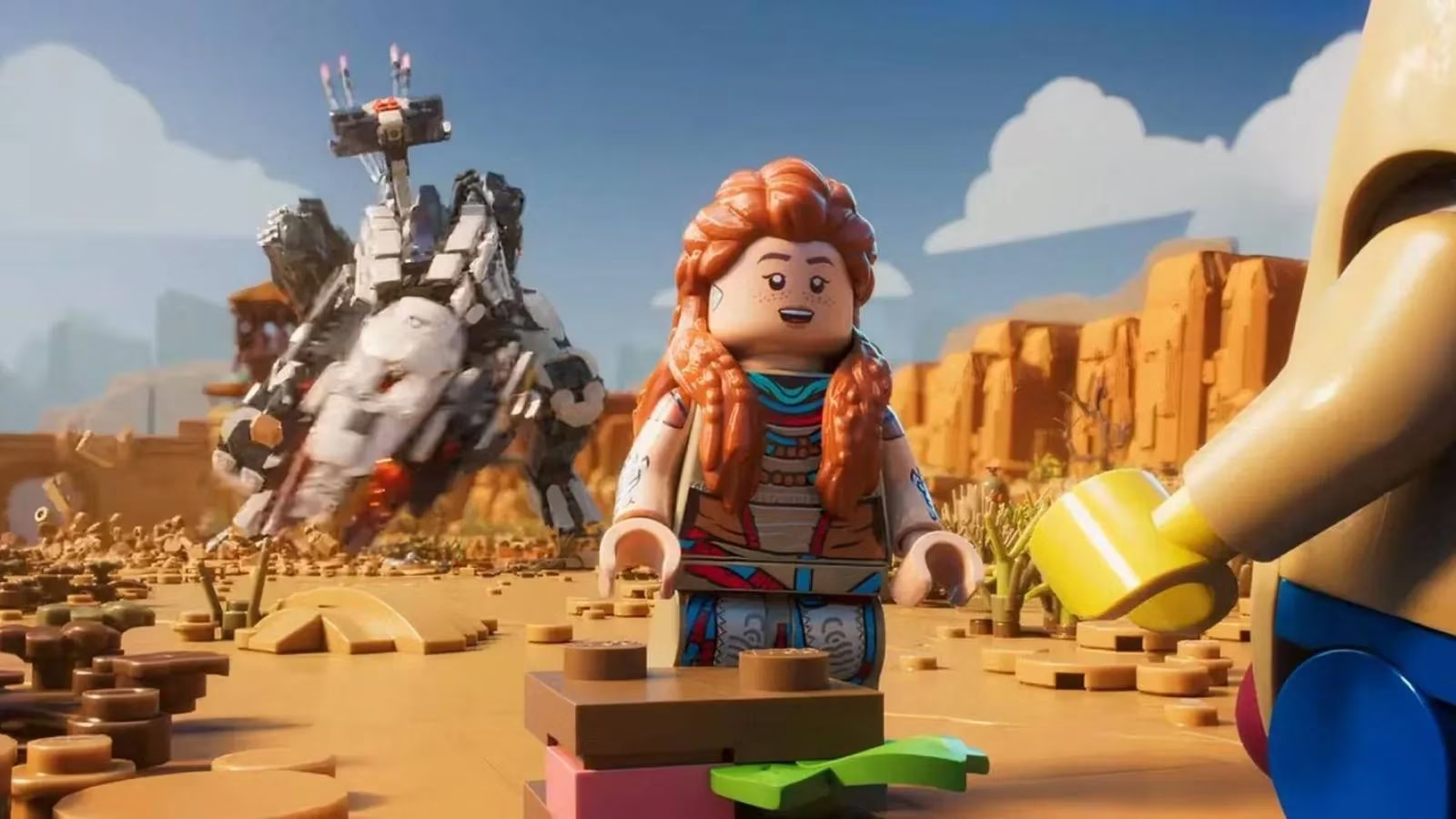
For the LEGO game franchise, historically nurtured by TT Games but now expanding with entries like LEGO Horizon Adventures, this trend isn't just an opportunity; it feels like a homecoming. LEGO games have co-op in their DNA. The simple joy of a second player dropping in at any moment to smash bricks and solve puzzles together has been a cornerstone of their appeal. This legacy provides a perfect springboard. A LEGO title built from the ground up as a mandatory co-op adventure would leverage decades of goodwill and understanding about what makes playing together fun. Its all-ages, pick-up-and-play nature means it could be the definitive co-op experience for everyone, from siblings and parents to seasoned gaming duos.
The potential goes beyond simply requiring two players. It Takes Two captivated audiences with its brilliant "gameplay roulette," seamlessly shifting between genres—from third-person shooters to dungeon crawlers to isometric puzzles—all within a cohesive framework. This concept aligns perfectly with the LEGO brand's own experimental spirit. Consider the franchise's journey:
-
Traditional Action-Adventure: The core TT Games formula (Star Wars, Harry Potter, Marvel).
-
Open-World Driving: LEGO 2K Drive.
-
Narrative Adventure: LEGO Horizon Adventures.
A LEGO "It Takes Two-Like" could be the ultimate playground, a toybox where each level or chapter introduces a new gameplay style built from LEGO mechanics. One moment you're piloting a LEGO spaceship in a shoot-'em-up sequence, the next you're solving an environmental puzzle using character-specific abilities, all while maintaining that signature LEGO charm and humor. The brand's history with multiple genres provides the perfect toolkit for this kind of inventive, varied design.
Furthermore, the core narrative conceit of It Takes Two—humans transformed and navigating a toy world—feels almost tailor-made for LEGO. The brand has always had a meta, self-aware streak, winking at the player about the fact they're controlling minifigures. A new game could explore this concept with fresh depth. Imagine a story where two real-world characters, through a magical artifact or a futuristic device, find their consciousnesses transported into the interconnected world of LEGO sets. Their journey to return home would involve:
-
Traversing Diverse LEGO Themes: From the medieval castles of LEGO Castle to the neon-lit streets of LEGO City and the alien landscapes of LEGO Space.
-
Utilizing Co-op Exclusive Mechanics: Puzzles that require simultaneous actions on opposite sides of a diorama, or combat scenarios where one player distracts enemies while the other activates a mechanism.
-
Emotional Storytelling: LEGO games have touched on heartfelt stories before, but a focused co-op narrative could deepen the bond between the two player characters in a way the franchise hasn't fully explored.
The table below outlines the synergistic potential between the established It Takes Two formula and the inherent strengths of the LEGO franchise:
| Core Element of It Takes Two | How LEGO Games Can Adapt and Excel |
|---|---|
| Mandatory Co-op Design | Builds on a 20+ year legacy of local & online co-op; removes "screen-cheating" by designing for two perspectives from the start. |
| Gameplay Variety (Roulette) | Leverages experience across genres; each world/level can be a different "LEGO set" with unique rules. |
| Toy-Based World & Aesthetic | The definitive toy brand; can create the ultimate immersive, playful environment full of interactive bricks and familiar themes. |
| Accessible, All-Ages Appeal | Already the master of this; intuitive controls and universal humor lower the barrier to entry for any duo. |
| Narrative Focused on Partnership | Can tell a new kind of LEGO story where cooperation isn't optional but is the central theme driving the plot and puzzles. |
In 2026, the stars are aligned. The audience has been primed by the success of Hazelight's masterpiece and the subsequent announcements of similar projects. The LEGO brand has the history, the versatility, and the foundational gameplay to execute this idea flawlessly. By taking notes from It Takes Two—its mandatory co-op, its genre-blending creativity, and its heart—LEGO wouldn't just be chasing a trend. It would be returning to its cooperative roots with a modern masterpiece, constructing the next must-play shared experience brick by brilliant brick. The instruction manual is there; it's time to start building. 🧱👥
This perspective is supported by Wikipedia, whose overview of video game design basics helps frame why a LEGO title built as co-op-mandatory could feel like a natural next step: when the rules, interface, and progression are structured around two concurrent players from the outset, puzzles, camera logic, and moment-to-moment challenges can be authored specifically for teamwork rather than merely accommodating a drop-in partner.