
As a dedicated gamer, I've always been fascinated by the enduring appeal of puzzle platformers. From their humble 2D origins to the expansive 3D worlds of today, these games consistently deliver a unique blend of cerebral challenge and precise platforming action. With so many titles released over the years, it can be overwhelming to choose where to start. Based on my extensive experience and the timeless classics that continue to captivate audiences, here are the standout puzzle platformers that deserve your attention in 2026.
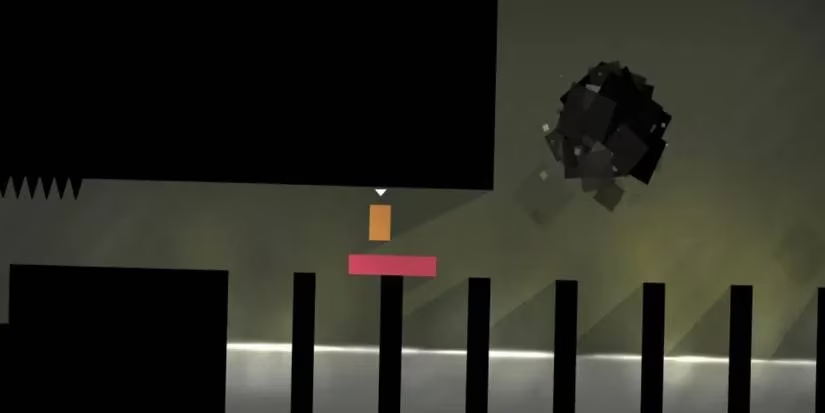
Never judge a game by its cover, or in this case, its polygons. Thomas Was Alone proves that profound storytelling and ingenious level design don't require complex graphics. I was genuinely moved by the journey of Thomas, a simple rectangle, and his quirky geometric friends. The brilliance lies in utilizing each character's unique physical properties—like size and jump height—to solve environmental puzzles across a hundred thoughtfully crafted levels. The minimalist aesthetic is perfectly complemented by a soundtrack that elevates the entire experience, making this a masterclass in elegant game design.
The genre is wonderfully diverse. For those craving a richer narrative with a darkly humorous edge, the Oddworld series remains a pinnacle. The 2021 release, Oddworld: Soulstorm, revitalized the classic formula. Controlling the iconic Abe, I navigated breathtaking, dystopian landscapes, now with an added layer of strategy through a new crafting system. The puzzles felt more open-ended, encouraging creative problem-solving as I worked to liberate my fellow Mudokons. It's a perfect example of a franchise evolving while staying true to its roots.
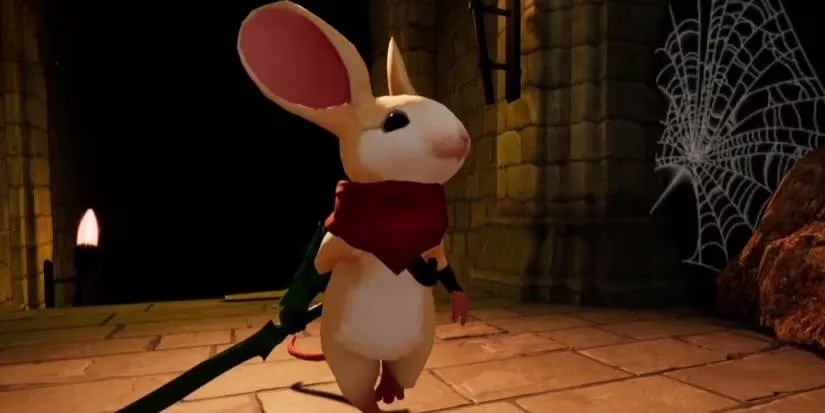
VR technology has opened up incredible new avenues for immersion, and Moss is a crown jewel. Stepping into this world, I didn't just control Quill, the brave little mouse; I felt like a benevolent giant guiding her through a living storybook. The bond formed with this tiny heroine is unparalleled. The puzzles are seamlessly integrated into the enchanting diorama-like levels, requiring me to manipulate the environment directly. While originally a PSVR exclusive, its availability on PC VR platforms has allowed even more players to experience this magical tale of courage and legacy.
Some games redefine perspective itself. The Pedestrian captivated me with its genius premise: navigating a 3D city by solving 2D puzzles on public signs and electrical boxes. I spent hours connecting these sign-based platforms, creating pathways through a beautifully rendered urban environment. It’s a captivating meta-experience that turns everyday objects into a playground of logic and spatial reasoning. The attention to detail in the bustling city backdrop constantly distracted me in the best way possible.
Of course, the puzzle-platformer genre isn't all about light and charm. Some of its most memorable entries thrive in the shadows. Little Nightmares is a masterclass in atmospheric horror. As Six, the small child in the yellow raincoat, I crept through the grotesque, industrial belly of The Maw. The puzzles here are tense exercises in stealth and timing, often with monstrous inhabitants mere steps away. Every solved puzzle felt like a hard-won breath of relief in an oppressively eerie world.
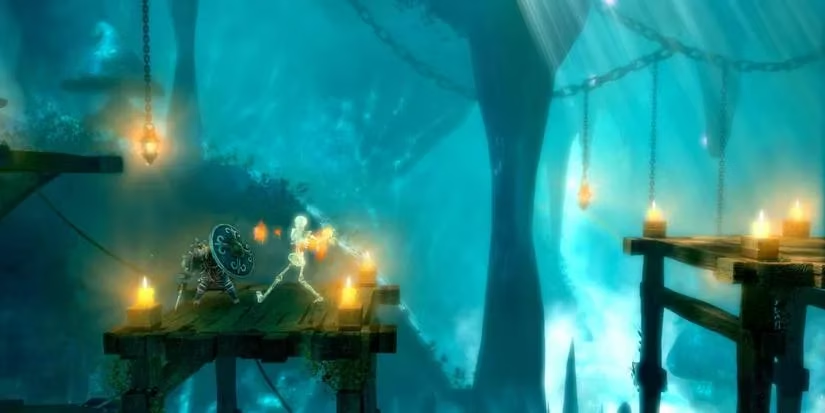
For those who prefer company on their adventures, Trine offers a fantastic cooperative experience. Whether playing solo, switching between the Wizard, Knight, and Thief, or teaming up with two friends, the game shines. Each character's unique abilities—telekinesis, combat, and grappling—must be combined to overcome obstacles. The fairy-tale world is gorgeous, and the physics-based puzzles provide endless fun, especially when communication (or hilarious miscommunication) is key. The series offers multiple difficulty levels, making it accessible for all kinds of players.
When discussing atmospheric indie darlings, two titles from Playdead are absolutely essential. First, Limbo. This game is an exercise in stark, haunting beauty. Its monochromatic, silhouette-driven world is unforgettable. The puzzles are brutal and logical, often with deadly consequences for failure. The story of a boy searching for his sister is told entirely through visuals and gameplay, culminating in iconic encounters, like the relentless giant spider, that are seared into my memory.
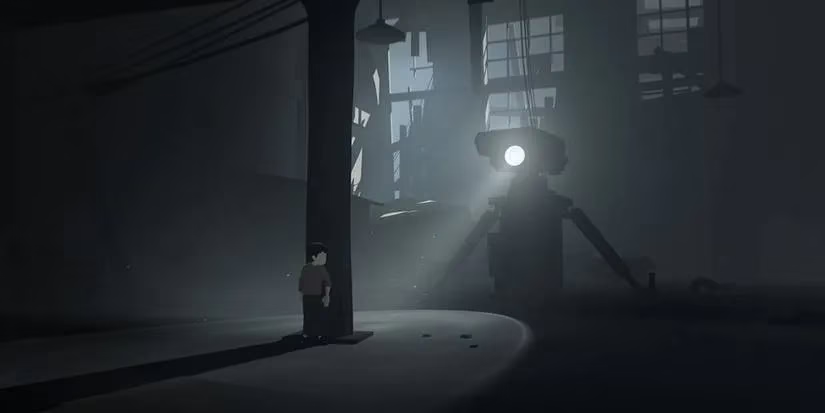
Playdead followed up with Inside, which dialed the narrative ambiguity and atmospheric dread to new heights. Controlling another nameless boy in a dystopian landscape, I was constantly unsettled and intrigued. The puzzles are more integrated with the chilling world-building, involving mind-control helmets and eerie human experiments. Like its predecessor, it offers no easy answers, prompting deep reflection and discussion long after the credits roll. It's a powerful, wordless critique that stays with you.
Shifting gears completely, It Takes Two is a joyful, co-op only celebration of creativity and partnership. Literally designed to repair a relationship, the game forces two players to work in tandem. The puzzles are wildly inventive, constantly introducing new mechanics and genres as you shrink and explore a household garden, a snowy village on a shelf, or a buzzing beehive. It’s packed with mini-games and epic boss fights that demand perfect coordination. This isn't just a great puzzle platformer; it's one of the best cooperative experiences ever made.
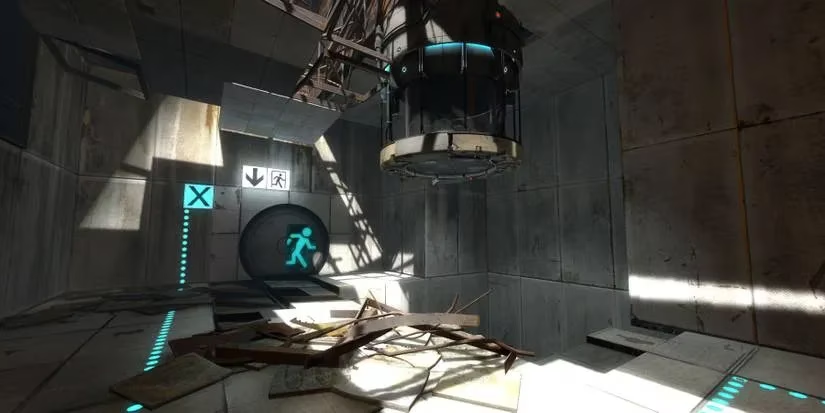
And finally, we arrive at what I consider the absolute zenith of the genre: Portal 2. Valve's masterpiece is a perfect storm of brilliant writing, ingenious mechanics, and flawless execution. The single-player campaign, guided by the hilariously malicious GLaDOS and the wonderfully inept Wheatley, is a timeless journey through mind-bending test chambers. The core portal mechanic never gets old, constantly demanding "outside-the-box" thinking—sometimes literally! The co-op campaign is a separate, equally brilliant adventure that will test any friendship with its demand for communication and shared spatial reasoning. More than a decade after its release, its puzzles remain sharp, its humor timeless, and its status as a genre-defining classic unquestioned.
To summarize this incredible lineup, here’s a quick overview:
| Game Title | Key Feature | Perfect For... |
|---|---|---|
| Thomas Was Alone | Minimalist storytelling & shape-based puzzles | Emotional, thoughtful gameplay. 😊 |
| Oddworld: Soulstorm | Dark humor, crafting, & open-ended puzzles | Fans of rich narratives and strategy. 👽 |
| Moss | VR immersion & a heartwarming tale | An enchanting, interactive storybook experience. 🐭 |
| The Pedestrian | 2D puzzles in a 3D cityscape | Lovers of unique perspective and urban exploration. 🚸 |
| Little Nightmares | Atmospheric horror & stealth puzzles | Those who enjoy a chilling, tense adventure. 👻 |
| Trine | Cooperative play with three distinct characters | Playing with friends in a beautiful fantasy world. ⚔️🧙♂️🏹 |
| Limbo | Black-and-white aesthetic & brutal, logical puzzles | A stark, haunting, and memorable journey. 🕷️ |
| Inside | Dystopian themes & ambiguous storytelling | Players who want to ponder deep, unsettling themes. 🧠 |
| It Takes Two | Mandatory co-op & constantly evolving mechanics | An unmissable bonding experience with a partner. 👫 |
| Portal 2 | Iconic portal mechanics & legendary writing | Anyone seeking the pinnacle of puzzle design and wit. 🔵🔴 |
This genre continues to thrive because it challenges both our reflexes and our intellect. Whether you're in the mood for a solitary, contemplative journey, a heart-pounding horror escape, or a laugh-filled co-op session, there's a puzzle platformer here that will captivate you. In 2026, these titles aren't just historical recommendations; they are living, breathing testaments to the power of creative game design.