
My husband and I are always on the hunt for that next great couch co-op game. You know, the real kind—two controllers, one screen, and a whole lot of teamwork and friendly bickering right there on the sofa. So, when we saw the announcement for Split Fiction from Hazelight Studios, the team behind It Takes Two, our first reaction was a mix of excitement and... well, a deep-seated apprehension. Let me explain. We adored the core gameplay of their previous game, but the writing, the dialogue, nearly made us quit for good. Playing It Takes Two felt like experiencing a masterclass in cooperative level design while being forced to listen to a particularly grating children's radio drama. The disconnect was that jarring.
From a purely mechanical standpoint, It Takes Two was nothing short of brilliant. Each chapter felt like unwrapping a new gift—a fresh mechanic that demanded perfect synchronization and creative problem-solving from both of us. We'd laugh hysterically at our failed attempts to swing across a gap in sync, and the triumphant high-fives when we finally nailed a complex platforming sequence were genuine highlights of our gaming year. The game started linear but quickly opened up into these wonderfully expansive playgrounds, filled with secrets and playful Easter eggs to discover together. As a cooperative puzzle-platformer, it was nearly flawless. 😊
But then the characters opened their mouths.
The entire narrative premise—a married couple on the brink of divorce, and the impact on their daughter—was utterly sabotaged by dialogue that felt like it was written for, and by, emotionally stunted pre-teens. Instead of the poignant, adult exploration of a failing relationship the setup promised, we got constant, petty bickering and blame games. We're supposed to believe these are adults considering a life-altering separation? Their snide remarks and childish tantrums were more in line with what I'd overhear from my daughter's friends, not from grown individuals navigating complex marital issues. At one point, the plot hinges on them deciding the best course of action is to make their own child cry, a task they undertake with a disturbing lack of gravity. The only other major character, the talking Book of Love, added insult to injury as a cringe-worthy, stereotypical comic relief that grated on our nerves every time it spoke. The chasm between the game's stellar gameplay and its abysmal writing was, and still is, one of the most frustrating experiences we've had with a critically acclaimed title.
Now, enter Split Fiction. On the surface, it looks like everything we could want in a 2026 co-op experience:
-
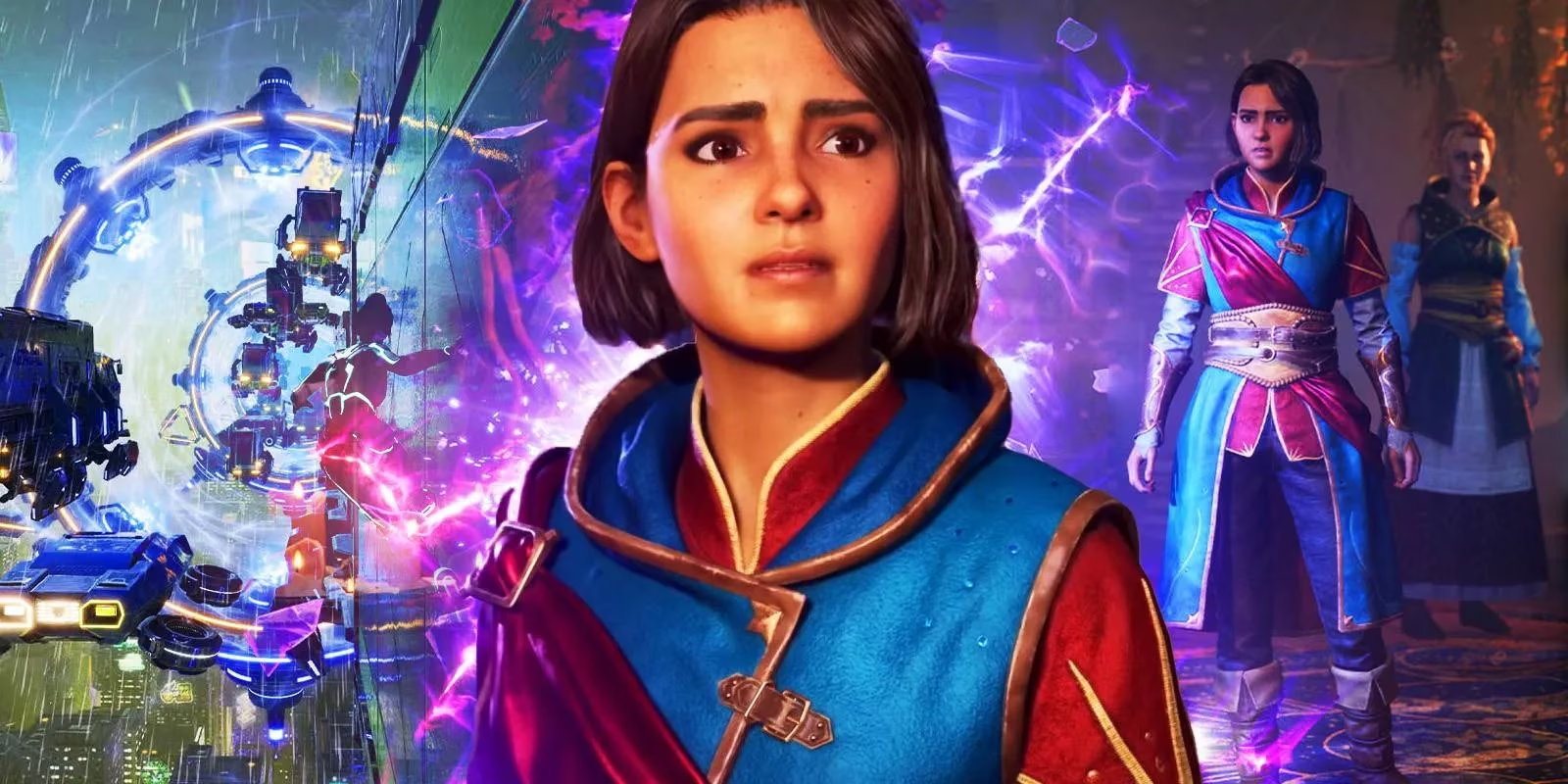
Fresh Concept: Two authors, Mio and Zoe, sucked into the worlds of their own stories.
-
Genre-Hopping Gameplay: Promising a wild ride alternating between sci-fi and fantasy settings.
-
Hazelight's Signature Design: The trailer showcases the same incredible variety—exploratory segments, intense action sequences, and inventive co-op puzzles that defined their previous work.
If the gameplay loop is even half as creative and tight as It Takes Two's, we're in for a mechanically phenomenal time. The potential for varied, breathtaking environments based on a writer's imagination is incredibly exciting!
However, and this is a massive however, the warning signs are already there. The protagonists, while not a married couple, seem to share that same infuriating dynamic. From the promotional material, they start off disliking each other, looking down on one another's chosen genres. It feels like we're being set up for another 10-15 hour journey of two characters who would rather snipe and complain than have a believable, evolving relationship. In a game literally about the power of writing and stories, having weak, immature writing would be an unforgivable, immersion-shattering sin. The dissonance would be even more pronounced than before.
So, are we writing off Split Fiction? Not entirely. We've decided to adopt a stance of cautious optimism. Here's why:
-
Visual Maturity: The game's aesthetic appears more stylized and mature than the dollhouse world of It Takes Two. This might signal a tonal shift in the narrative as well.
-
No Built-in Excuse: In It Takes Two, one could weakly argue the childish dialogue was a reflection of the characters being dolls or seen through their daughter's eyes. Split Fiction has no such narrative crutch. The writers have to stand on their own.
-
They Must Have Learned: It's hard to believe the developers were completely unaware of the criticism leveled at their previous game's writing. We have to hope they've taken that feedback to heart.
Our wishlist for Split Fiction is simple:
-
Gameplay that innovates on Hazelight's already stellar co-op foundation.
-
A story and dialogue that treat its players—and its own characters—with respect and maturity.
-
Character growth that feels earned, not just a switch flipped at the final act.
We desperately want another fantastic co-op game to sink our teeth into. The couch co-op landscape in 2026 still needs more champions like Hazelight. We want to explore every sci-fi metropolis and fantasy realm Mio and Zoe can conjure. But first, we'll be waiting, watching reviews and player impressions very closely. We'll be listening for one thing above all: has Split Fiction finally fixed the fatal flaw of its brilliant predecessor? Here's hoping the answer is a resounding yes. 🤞